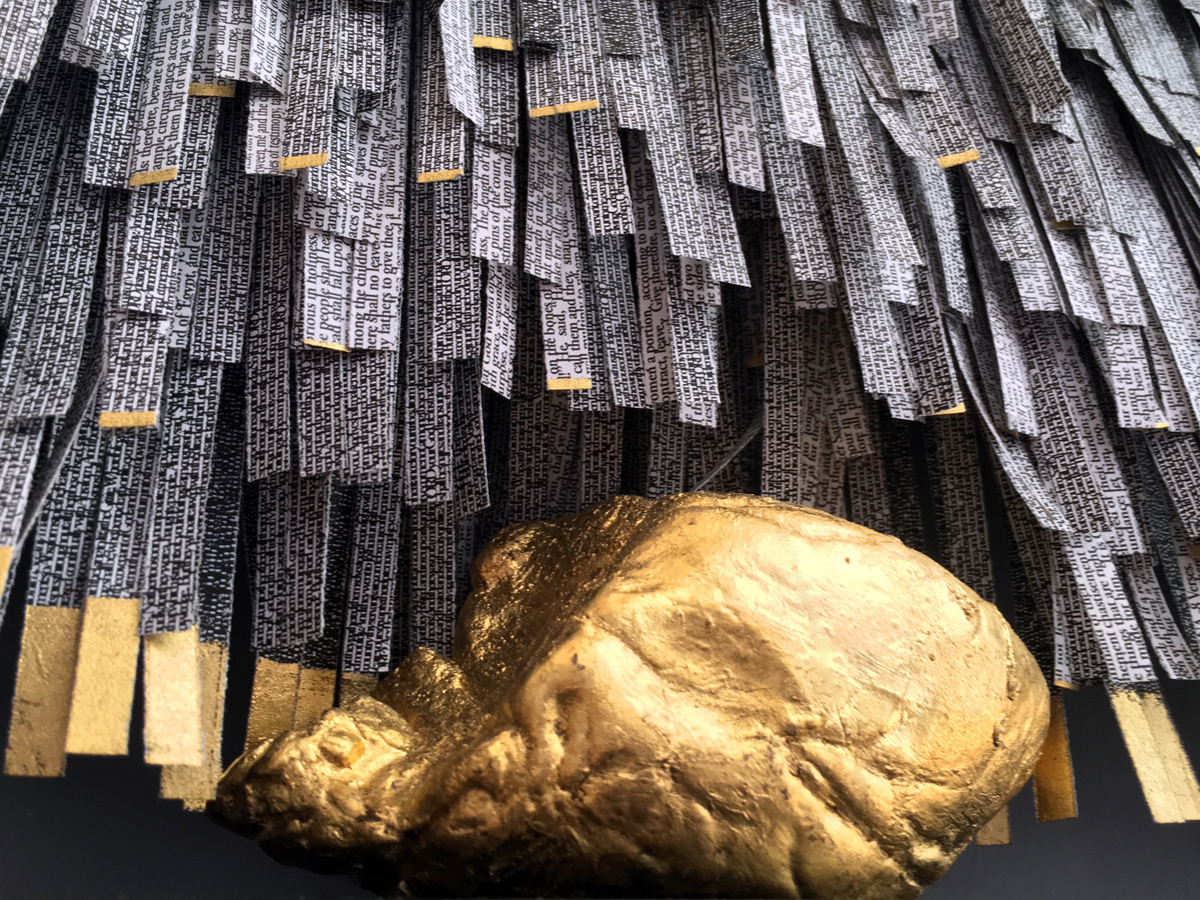
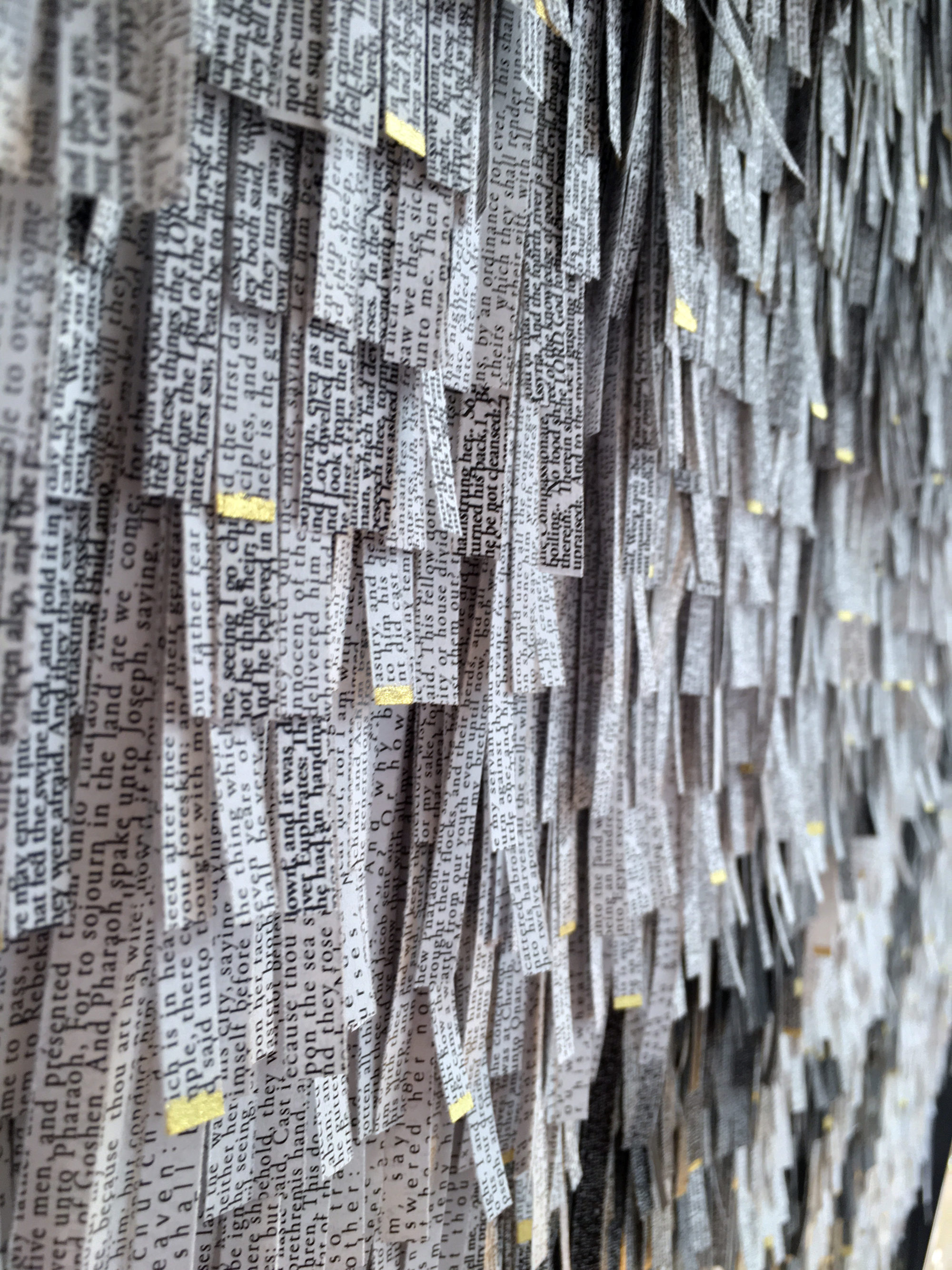
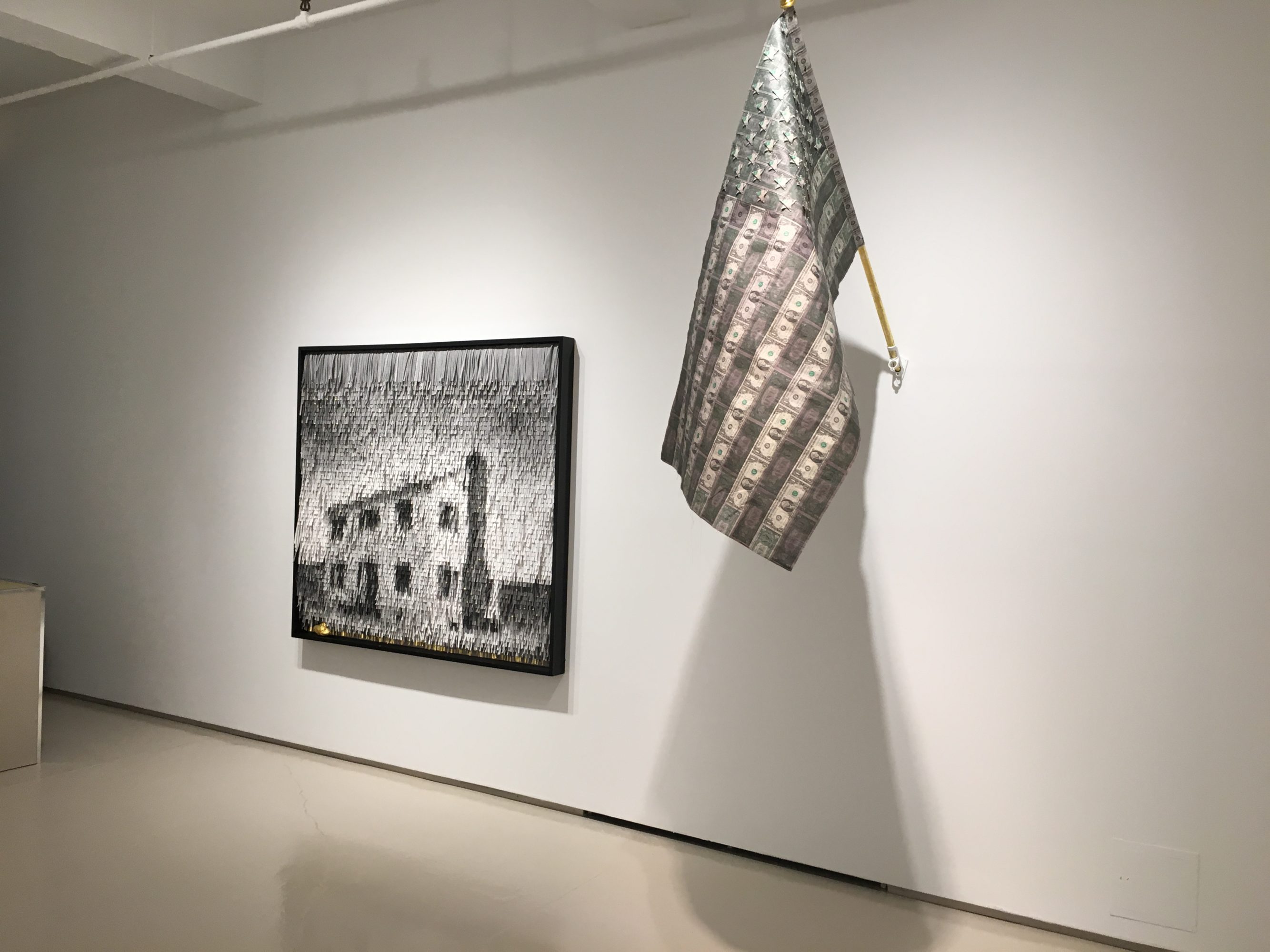
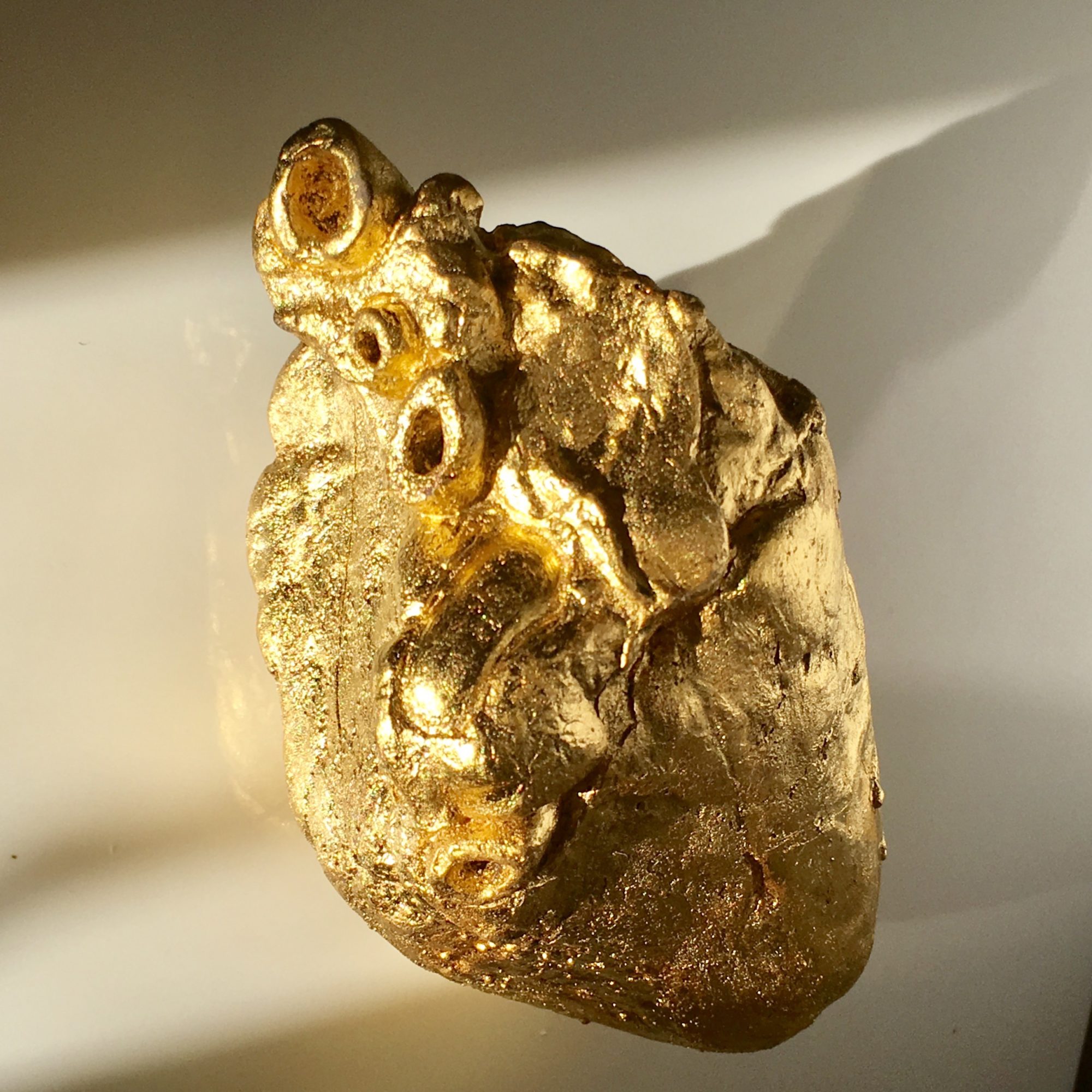
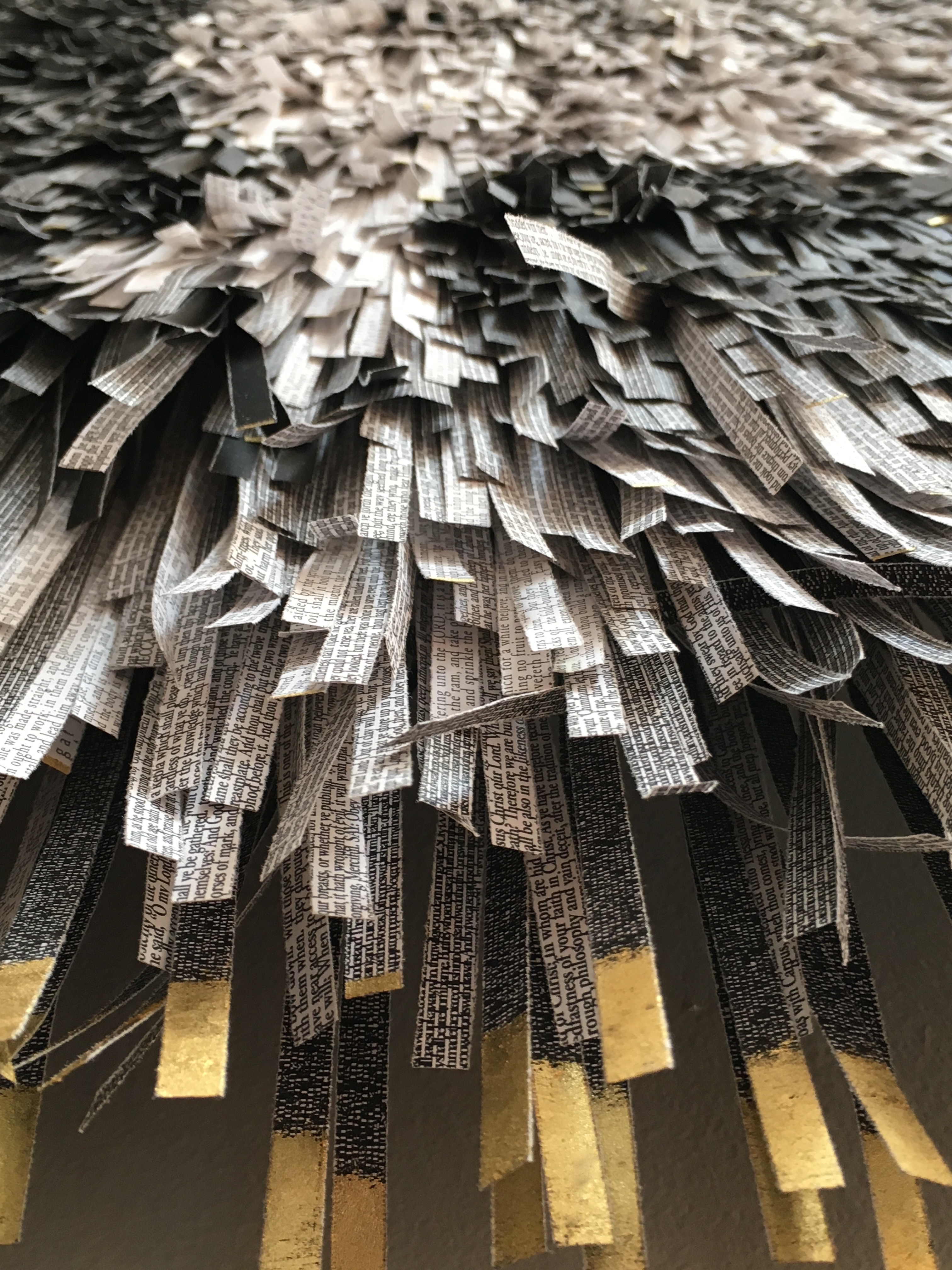
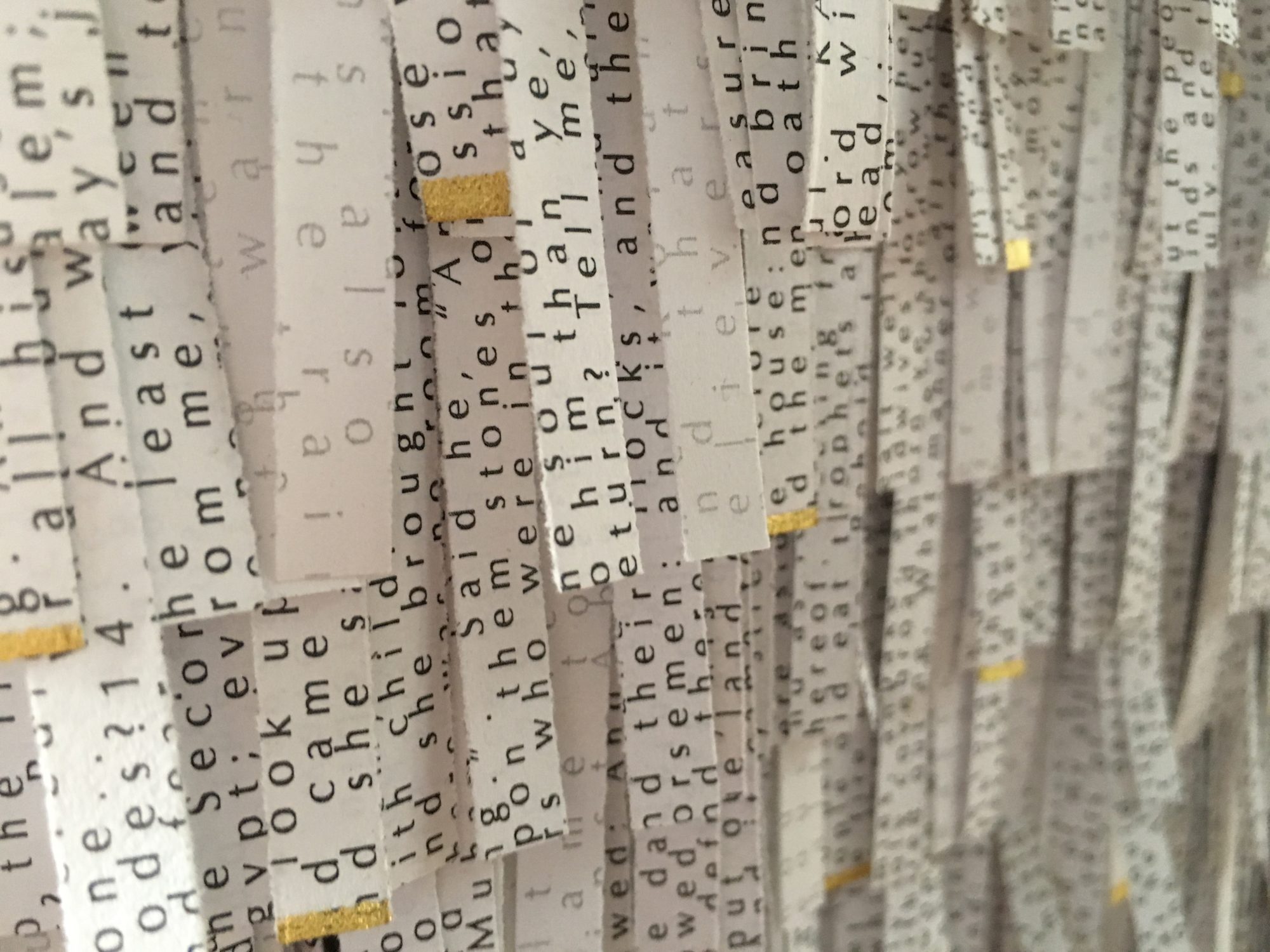
Shredded cotton/rag, toner, 23k gold leaf, cast stoneware lamb heart, 55 x 61″ full text of Old Testament,
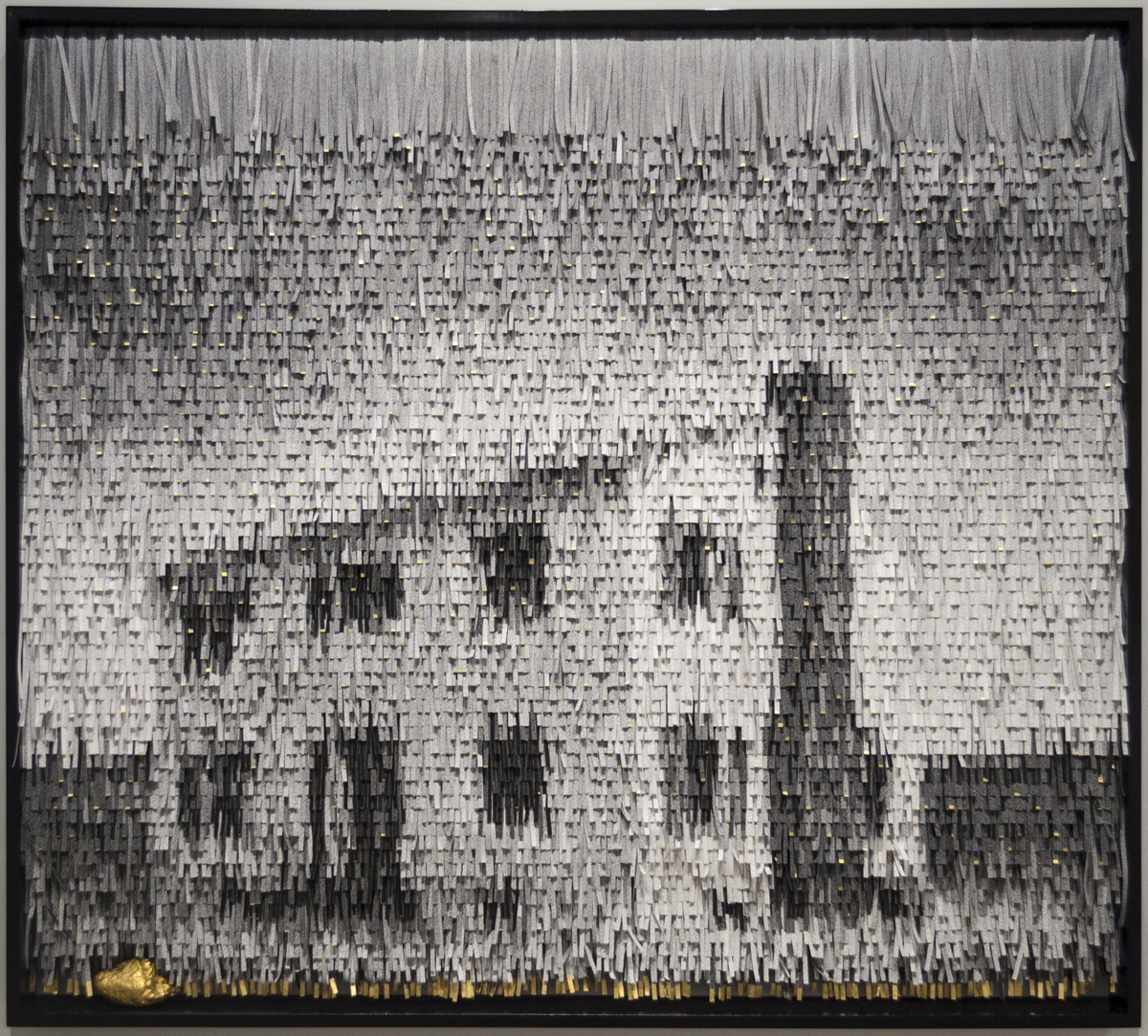
55”x61”–Shredded Cotton/Rag paper, Toner, 24k Gold leaf, cast stoneware lamb heart
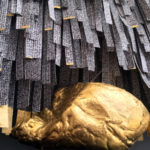
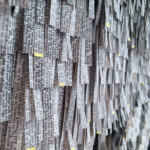
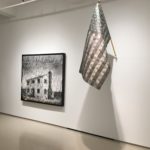
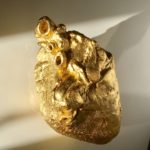
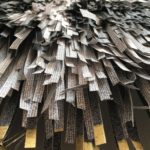
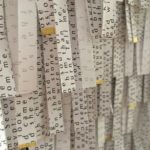
Image created from the full text from: Old testament, New Testament, and Koran, rendered in different font sizes and spacing. The image for the house is based on photo taken on May 5, 1955 at Navada’s nuclear test Site at Yucca Flats, moments before being destroyed by atomic the blast in operation CUE. -National Archives Identifier: 541788
Foundations of Sand.
The piece begins with a collision that is already present inside the material before any image appears. The full text of the Old Testament, New Testament, and Koran is compressed together into a single body of language, three scriptures that share common ancestry and yet have underwritten centuries of conflict between the communities that hold them sacred. That volatility, the sense of incompatible certainties packed too closely together, needed a form that could hold pressure without resolving it, and I found that form in a specific historical photograph: a house built at the Nevada Test Site at Yucca Flats, photographed on May 5, 1955, in the instant before Operation Cue destroyed it with an atomic blast. The house was constructed to resemble an ordinary postwar American home, the kind of structure meant to represent domestic normalcy at exactly the moment questions of nuclear annihilation, geopolitical realignment following the founding of Israel after the Second World War, and entrenched religious hostility in the Middle East were becoming permanent features of the century. Rendering that house out of the three scriptures most implicated in that hostility lets the image carry two kinds of destruction at once, the literal blast the photograph documents and the slower, ongoing one the interwoven texts imply.
The image itself is built entirely from strips of text, cut, layered, and arranged by hand, one strip corresponding to a single pixel of value in the underlying photograph. Font size and spacing across the three scriptures do not mark territory between traditions. They generate tone. Lighter passages in the image use text sparse and large enough to remain legible up close, while the darkest passages are built from many layers of text compressed until legibility collapses entirely into what reads, from a distance, as pure black. Scripture becomes illegible not through erasure but through accumulation, crushed past the point of being read by the sheer density of its own repetition, so that the darkest regions of the house, its structural shadows, are made of exactly the material a viewer can no longer parse.
The frame surrounding the piece extends this logic rather than simply containing it. A drape of gold leaf falls across the bottom of the composition, referencing the gilded edges common to sacred texts and, by extension, the older biblical episode of the golden calf, an act of devotion turned toward the wrong object. Resting within that gold, visible in the frame rather than tucked into any single position within the house’s silhouette, sits a cast stoneware lamb heart. The lamb is a shared figure across all three traditions represented in the text, invoked wherever sacrifice is offered to appease or honor the divine, and placing it here ties the three scriptures together through the one ritual gesture they hold in common rather than through any doctrine that separates them.
The title comes from the biblical parable of building a house on an unstable foundation, and I mean it to extend past scripture into the cultures that scripture has helped define. A structure, whether a house or a civilization, built on convictions fundamentally hostile to the convictions of one’s neighbors carries an instability that no amount of gold leaf or reverence can fully secure. The photograph gives that instability its most literal image: an ordinary home, seconds from being erased by a force built explicitly to erase it. The piece asks whether the foundations we build our beliefs on are any less exposed.