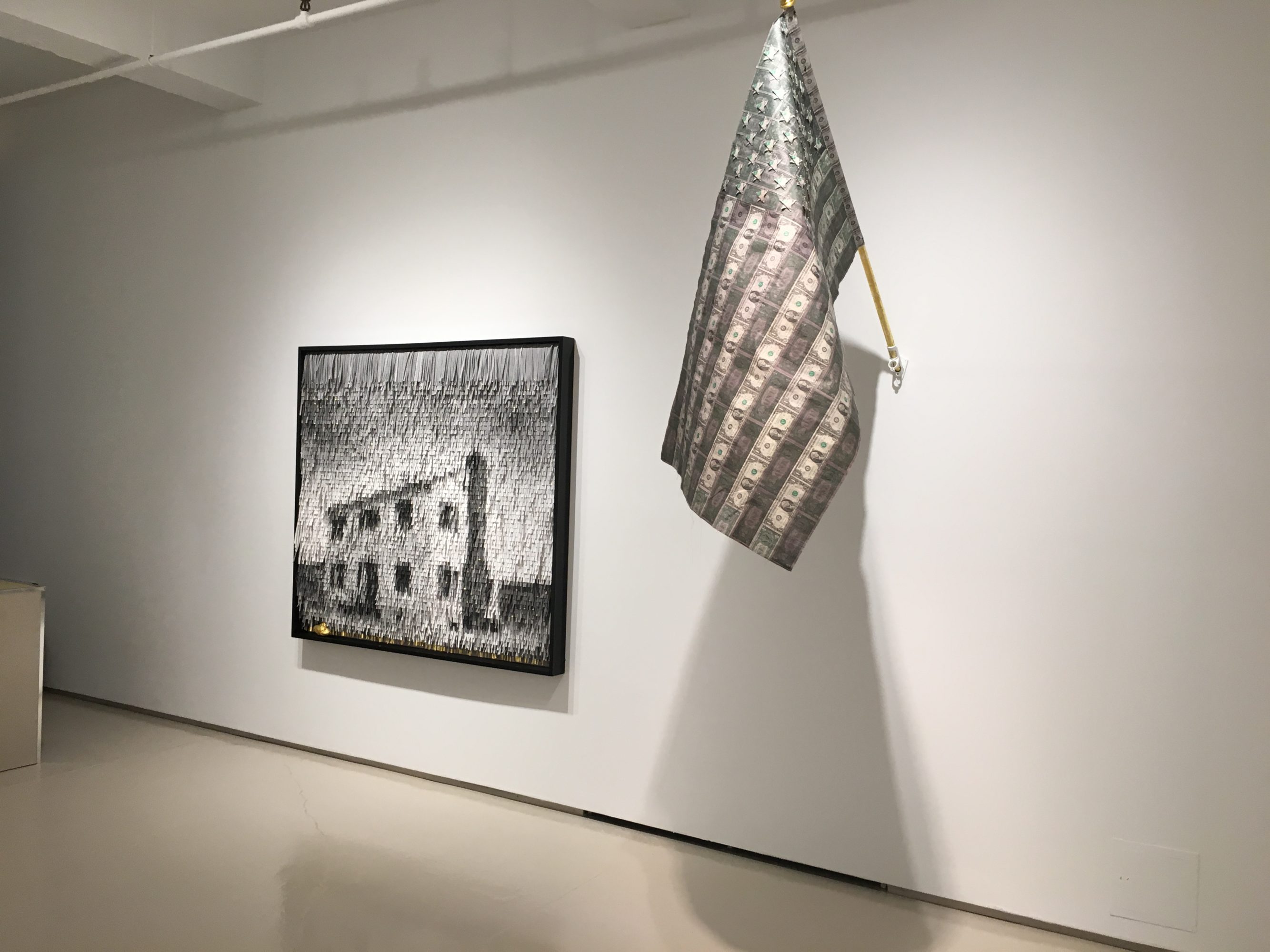
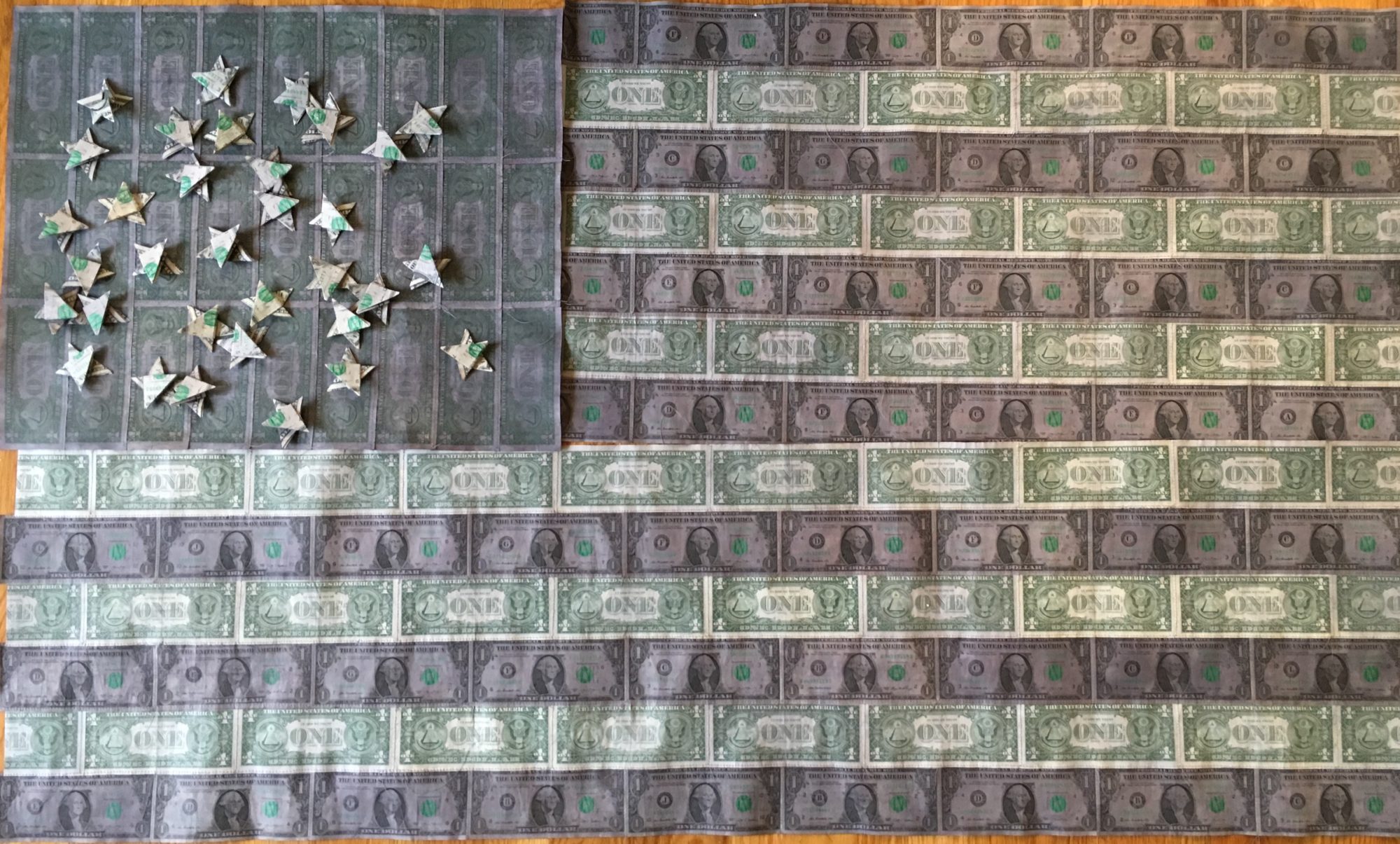
55×32 (flag), Dyed US dollar bills, thread, flag pole
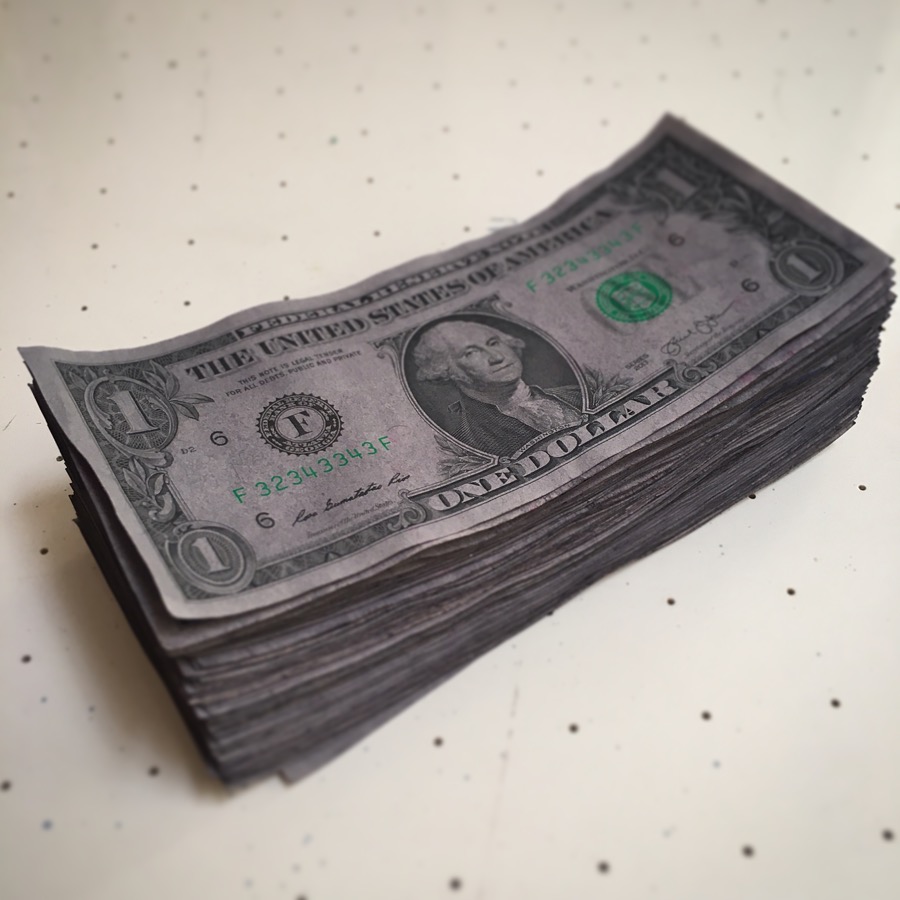
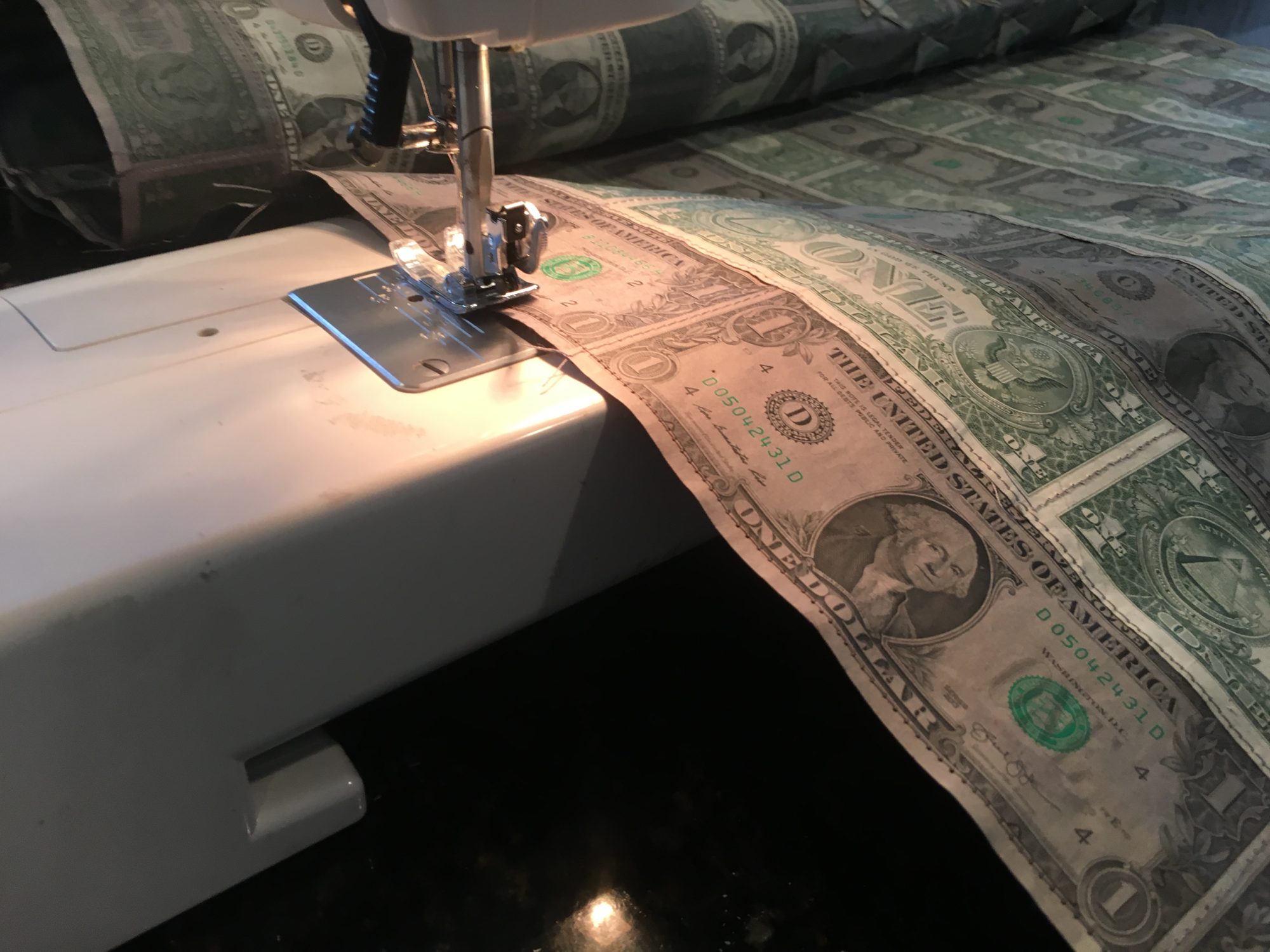
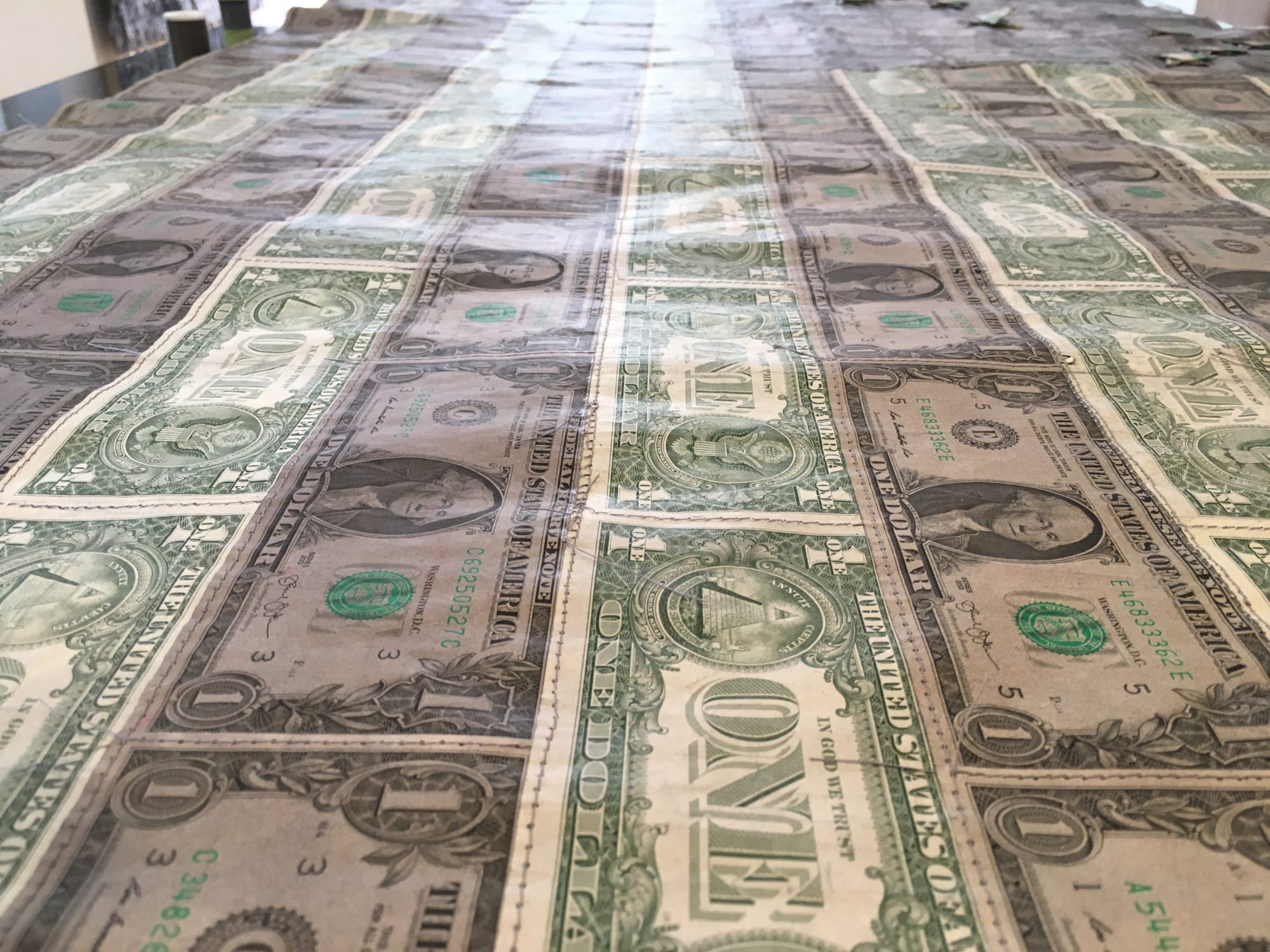
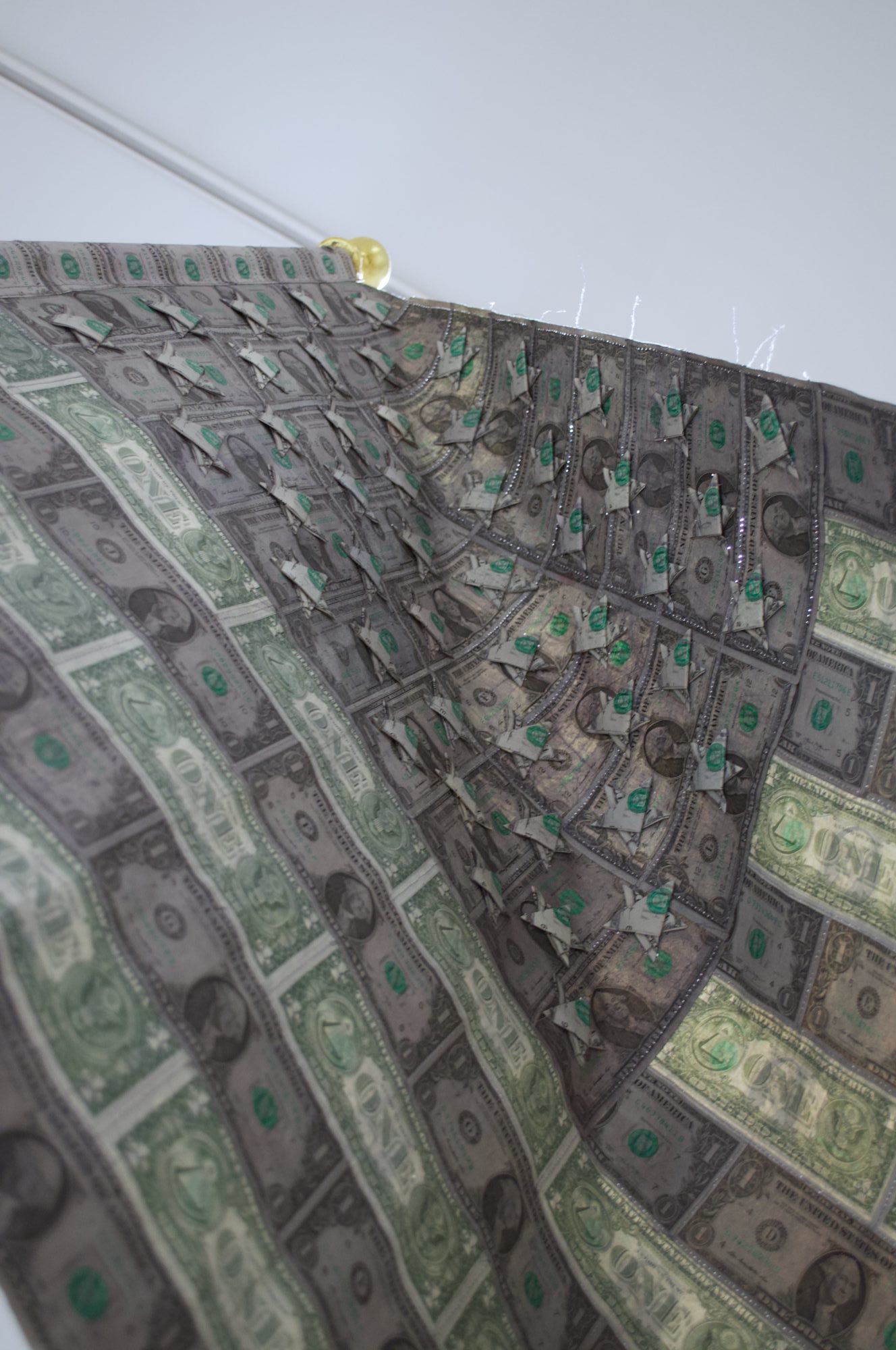
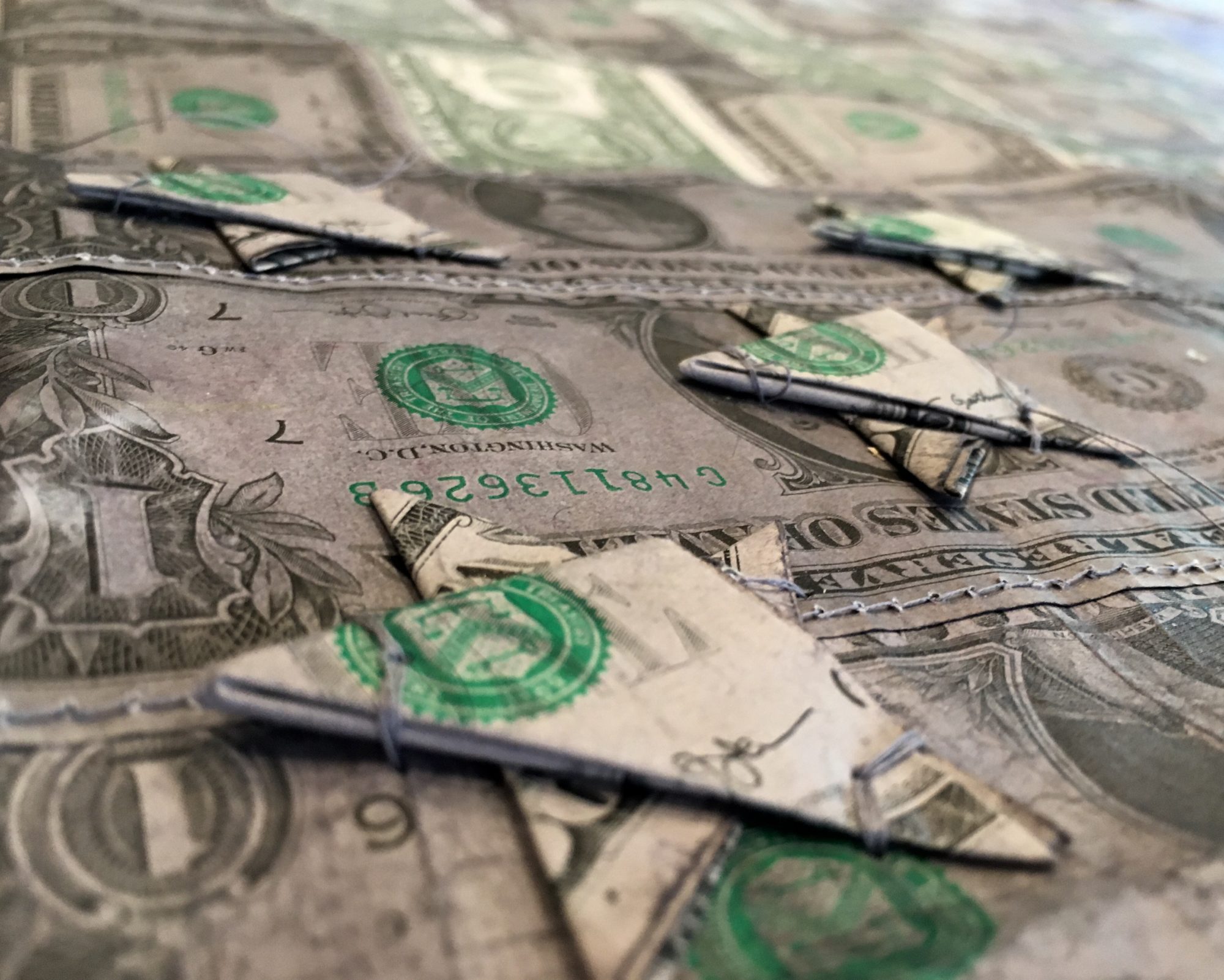
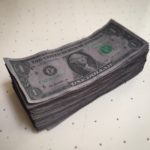
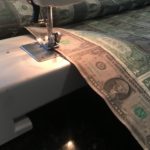
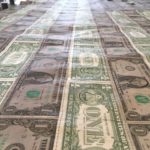
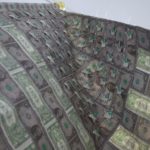
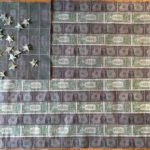
112 indivudal dollar bills sewn into a standard size replica of the US Flag which comments on the Supreme Court decision that equates donating money for political interests with freedom of speech. Half of the money used has been dyed a darker color to reference the “dark money” in our current politics.
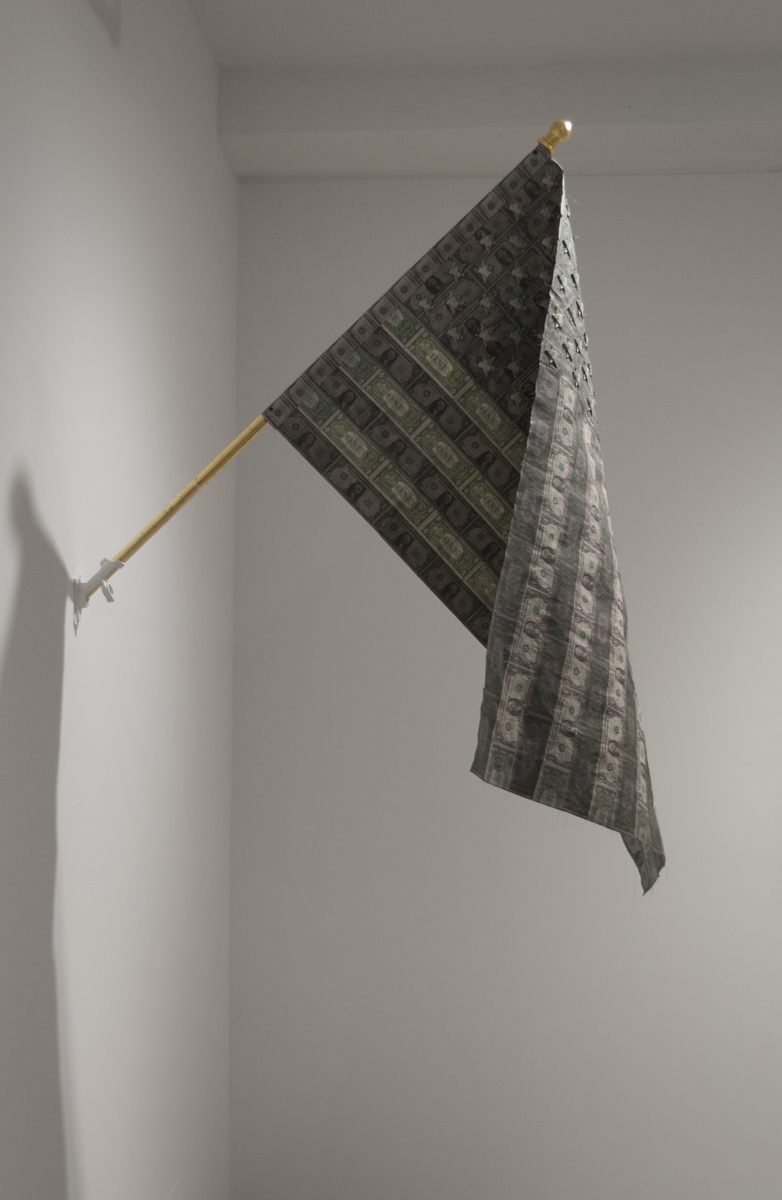
55×32 (flag)
Dyed US dollar bills, thread, flag pole
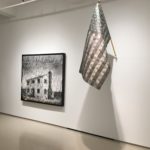

558 U.S. 310
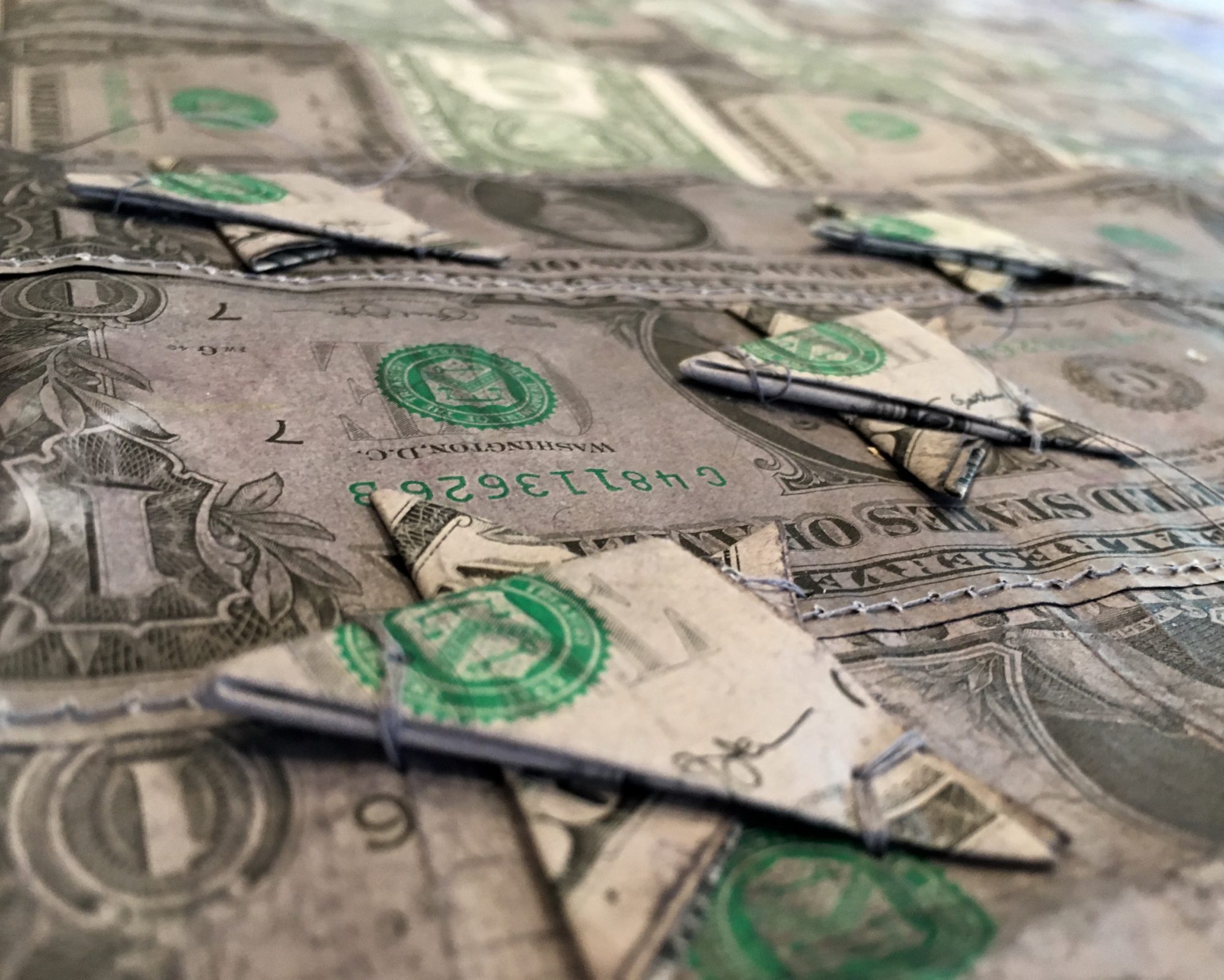
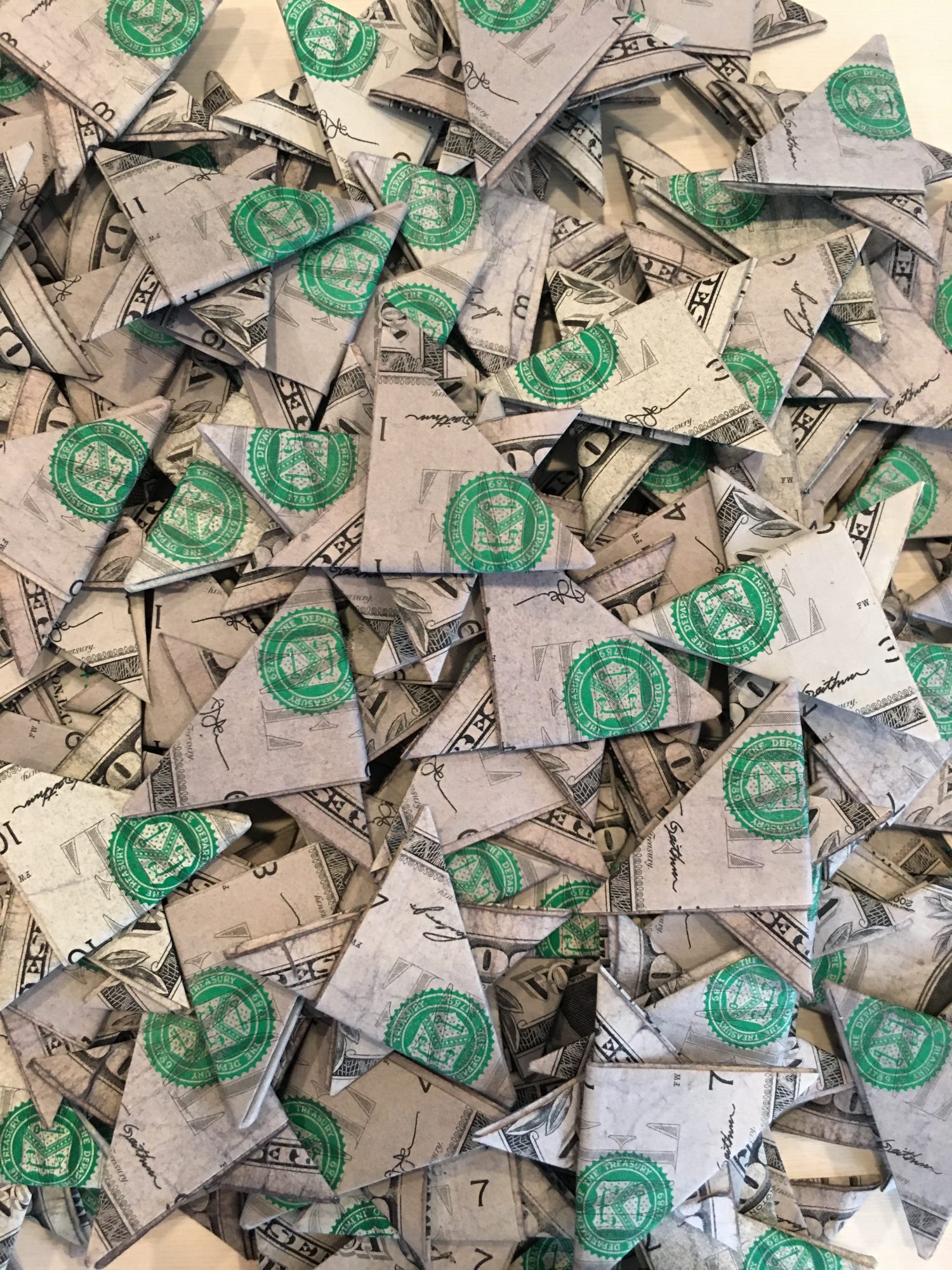
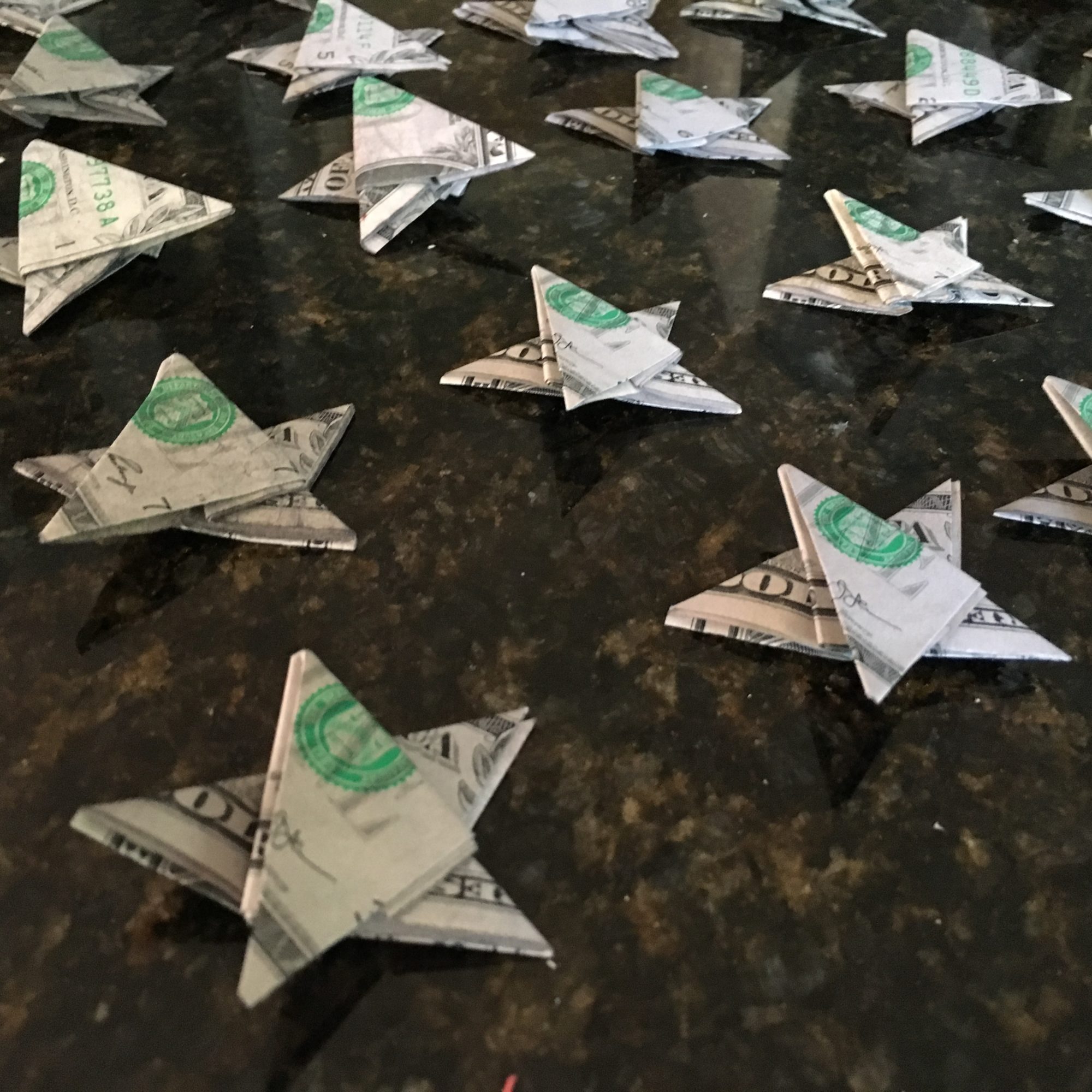
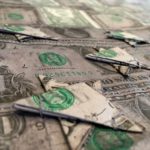
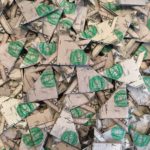
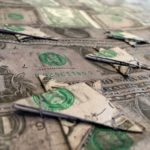
The piece began with a discovery rather than a plan. Folding a dollar bill into a five pointed star, a common origami exercise, I noticed how directly that star echoed the stars stitched onto the American flag, and the coincidence would not leave me alone. Money already carries symbolic weight disproportionate to the paper it is printed on. Its value exists only because a population agrees to believe in it, and that agreement is itself a kind of power, distributed unevenly and rarely examined. Building an actual flag out of actual currency, rather than fabric printed to resemble it, seemed like the only honest way to make that power physically present in the object rather than merely referenced by it.
The formal correspondences went further than I expected. When I set the flag’s dimensions against the historical proportions of the Star Spangled Banner, the height of a single dollar bill matched the width of the flag’s stripes with an exactness that felt almost intentional, as though the ratio governing the original flag’s stripes had anticipated the ratio of the bill four generations before anyone thought to fold one into this design. Each bill used in the piece was dipped partway in dark ink and left to dry flat, producing the two tones, one pale and one darkened, that stand in for the flag’s red, white, and blue. Every star is hand folded and sewn through the flag from both faces, so that each visible star on the front is doubled by a second star on the back. The construction insists that the object read correctly from either side, the way a flag is expected to.
This is the second flag I have built from currency. The first was dipped in tea, referencing both the Boston Tea Party and its contemporary political inheritor, and carried a very different charge, closer to populist protest than institutional critique. This flag is concerned with money’s more sanctioned circulation through politics, the unlimited and often untraceable spending enabled by the Supreme Court’s 2010 ruling in Citizens United v. Federal Election Commission, which held that political spending by corporations and unions is a form of protected speech. I titled the piece after the case’s bare legal citation rather than its common name. Anyone who recognizes 558 U.S. 310 already knows what the work is about before they see it, but most viewers will not, and I wanted the withholding to be deliberate. The flag should be legible as an object, a dollar bill flag, dark and light, doubled stars, before it resolves into a specific argument about campaign finance. Recognition should feel earned rather than handed over.
Display matters to that argument as much as construction does. I have shown the piece mounted on a household flagpole of the kind used to fly a flag from the front of a house on Flag Day, angled at roughly forty five degrees rather than hung vertically, which reduces strain on the fabric and allows the folded detail of the stars to remain visible rather than collapsing into shadow. That presentation places the work inside a recognizable domestic ritual, the same gesture of civic display that appears on porches and front lawns around the Fourth of July, Veterans Day, or Flag Day itself. The flag is meant to be encountered first as a familiar sight, something seen without being examined, before the material underneath asks the viewer to look again at what that familiarity has been quietly standing in for.