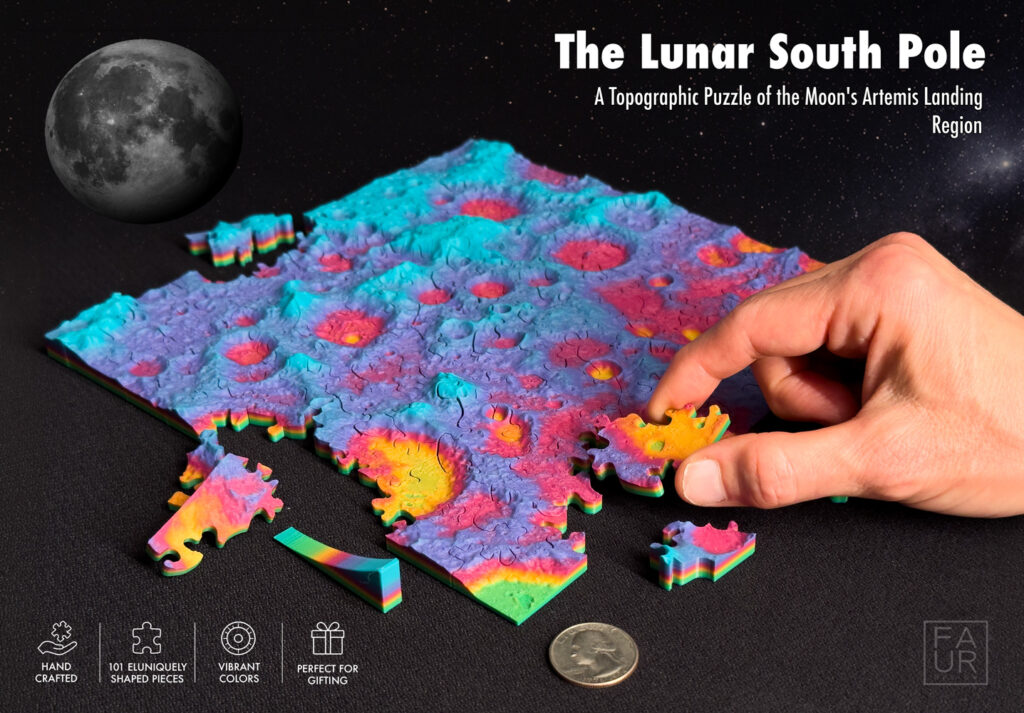
A tactile topographic puzzle based on NASA elevation data
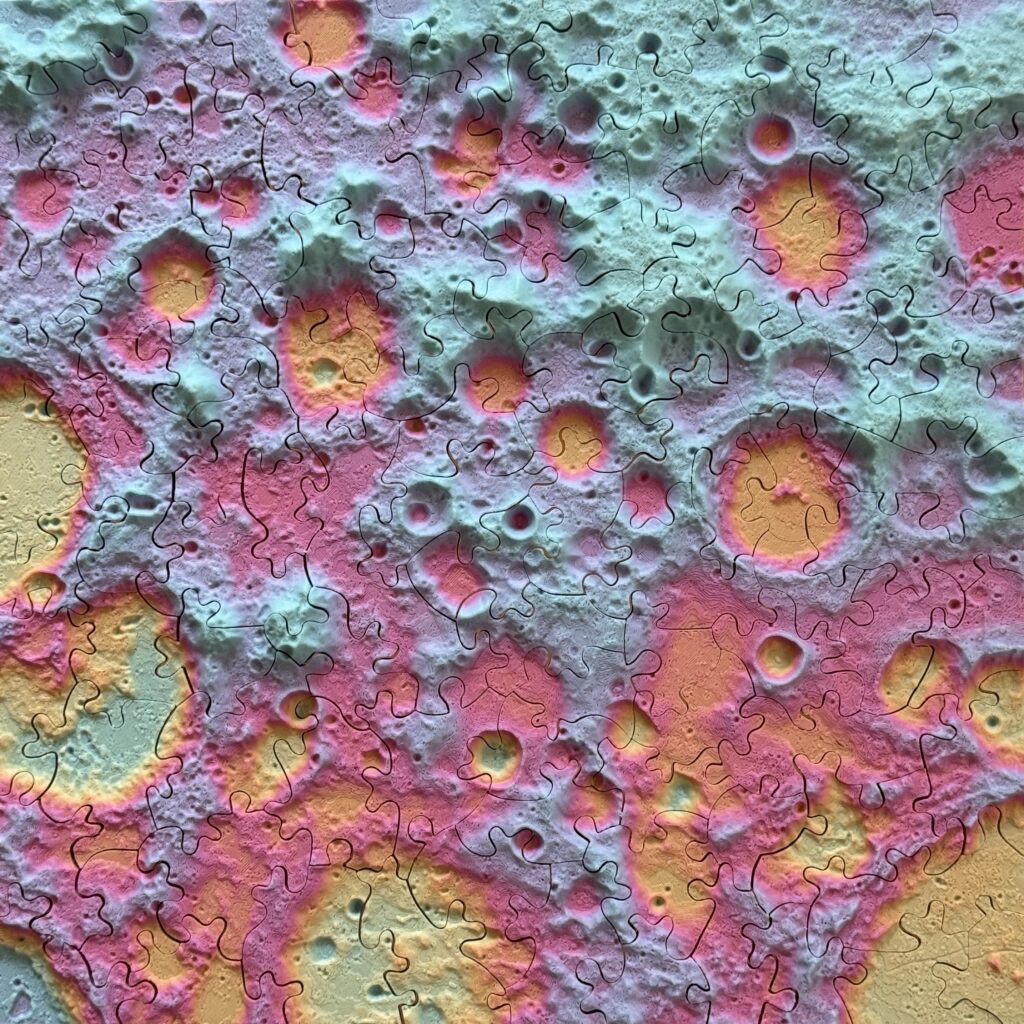
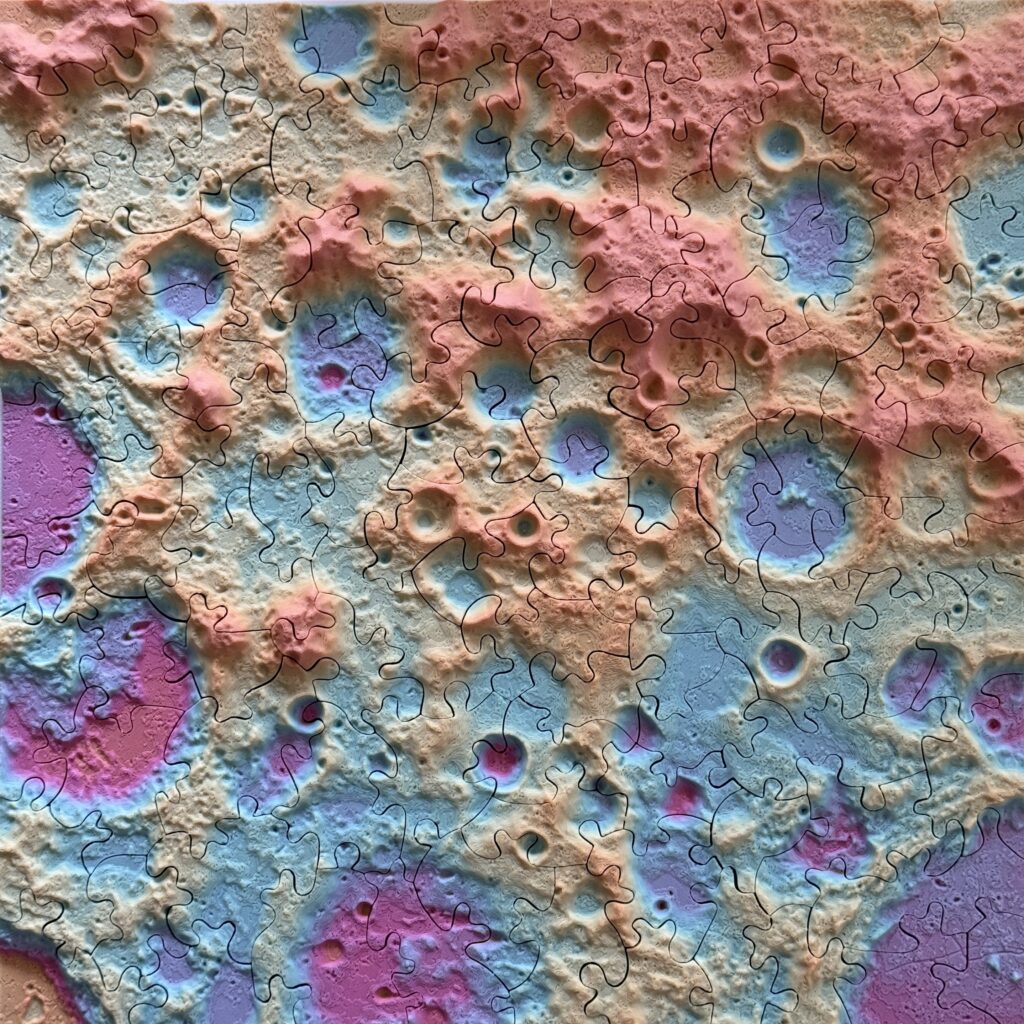
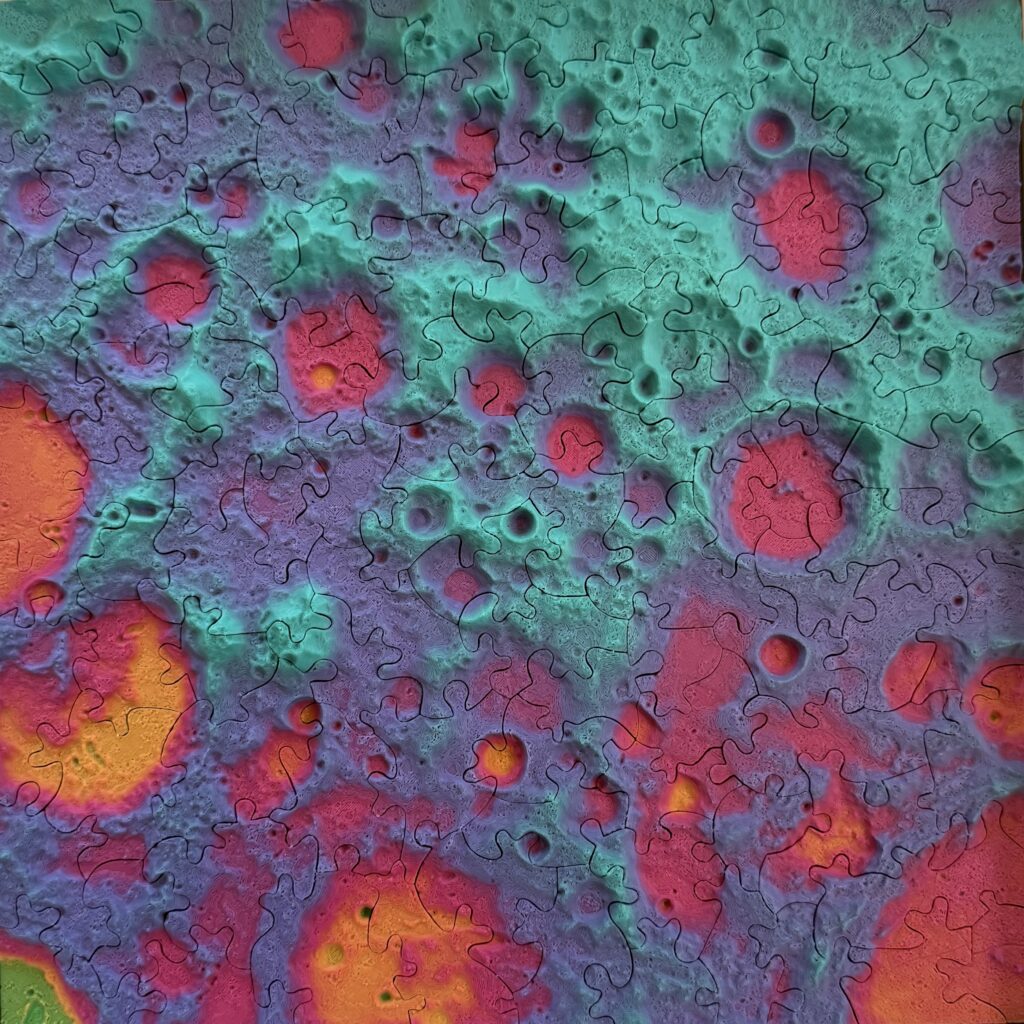
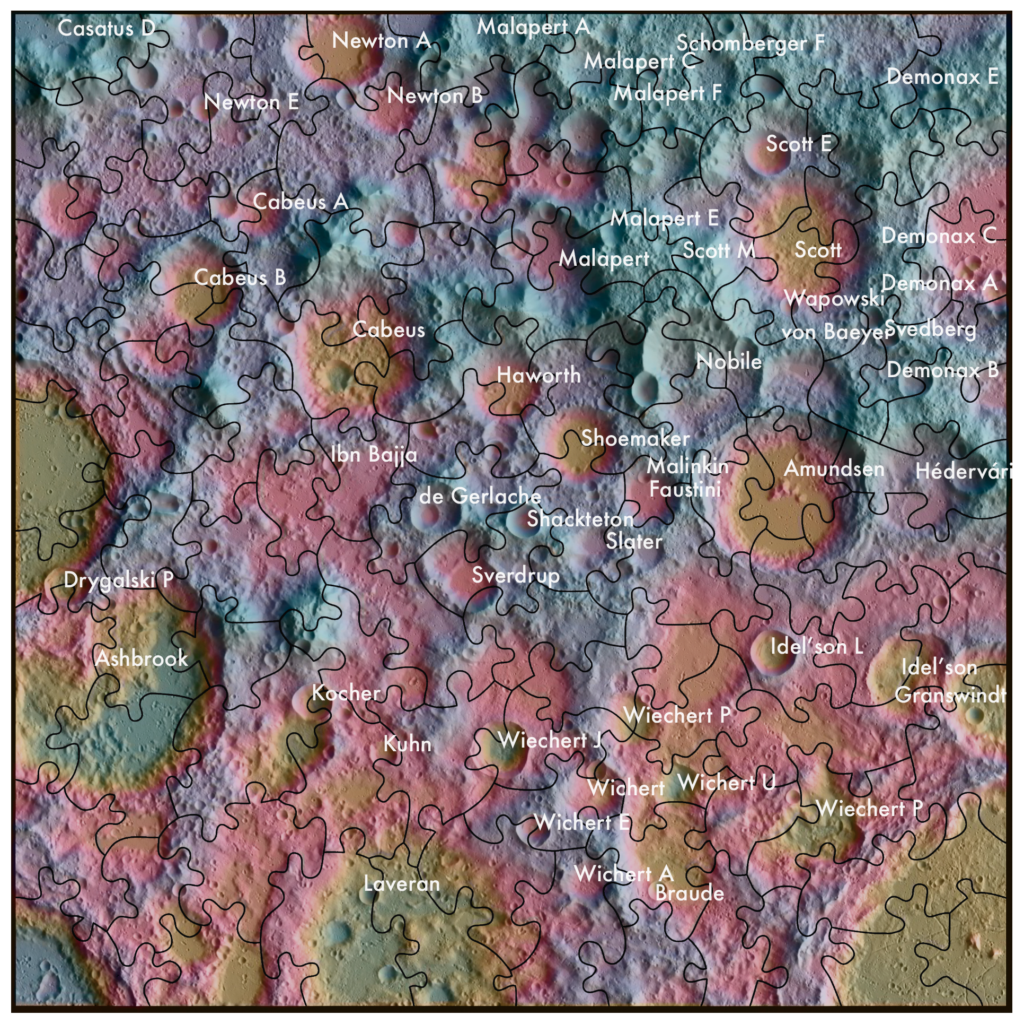
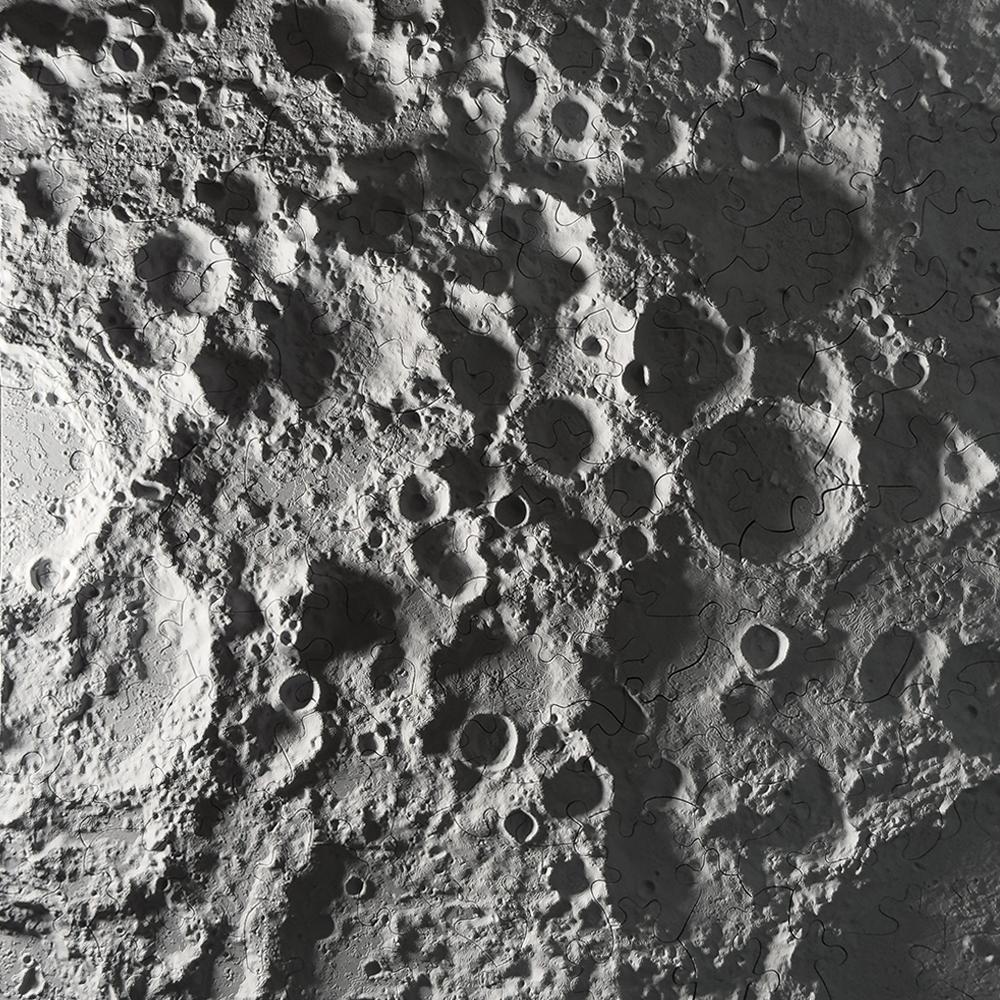
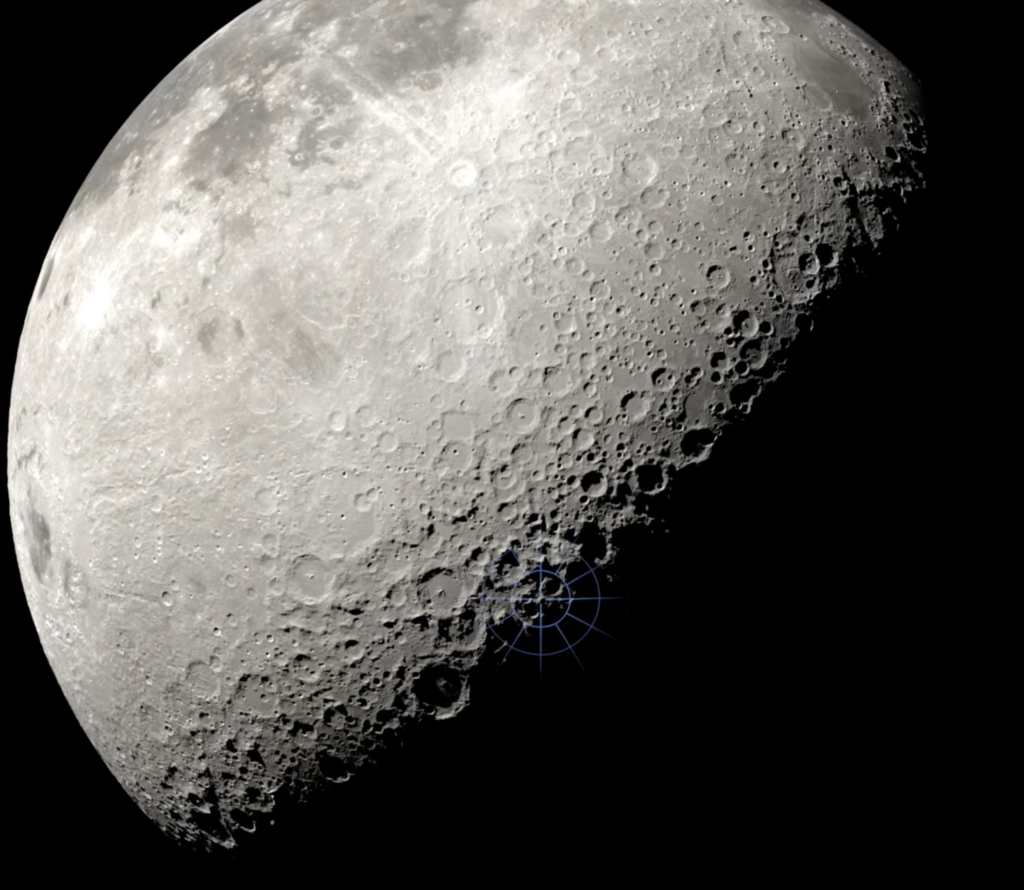
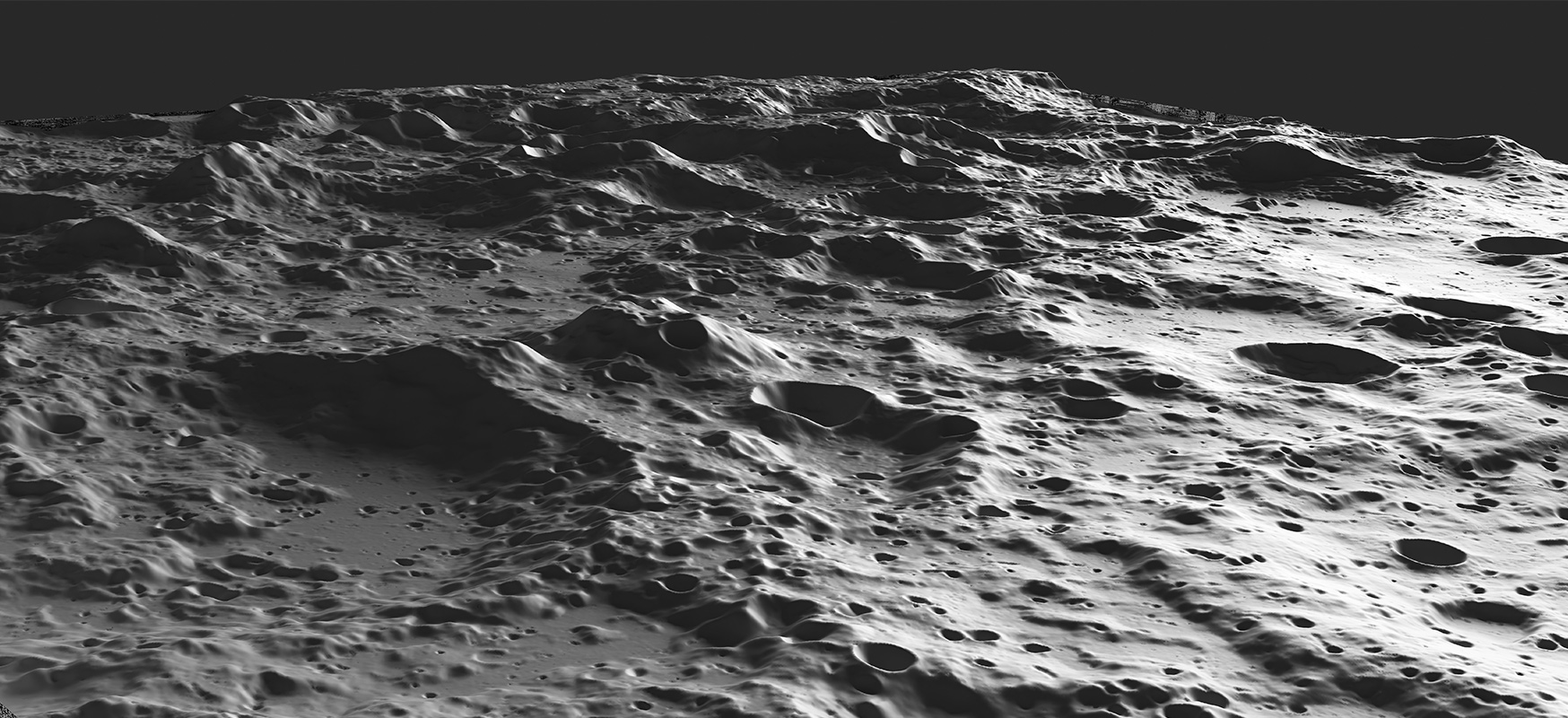
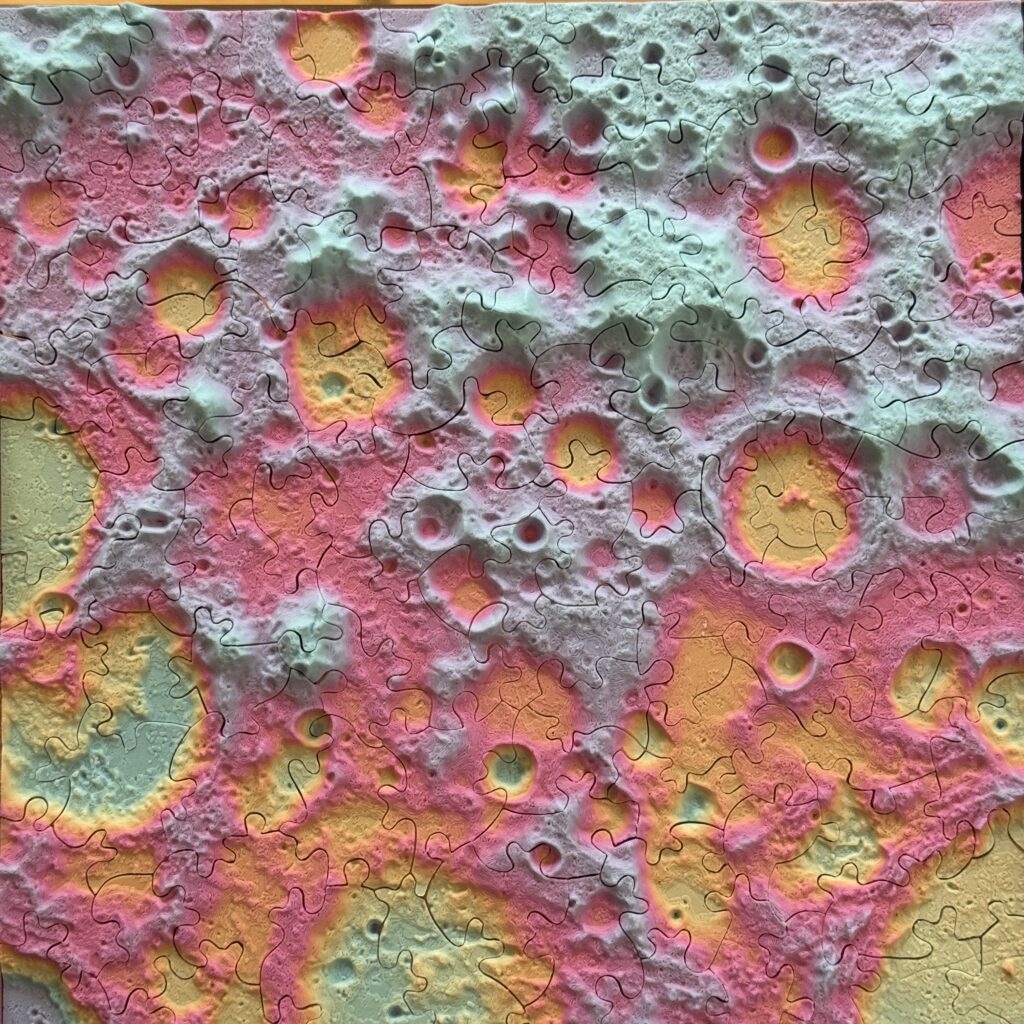
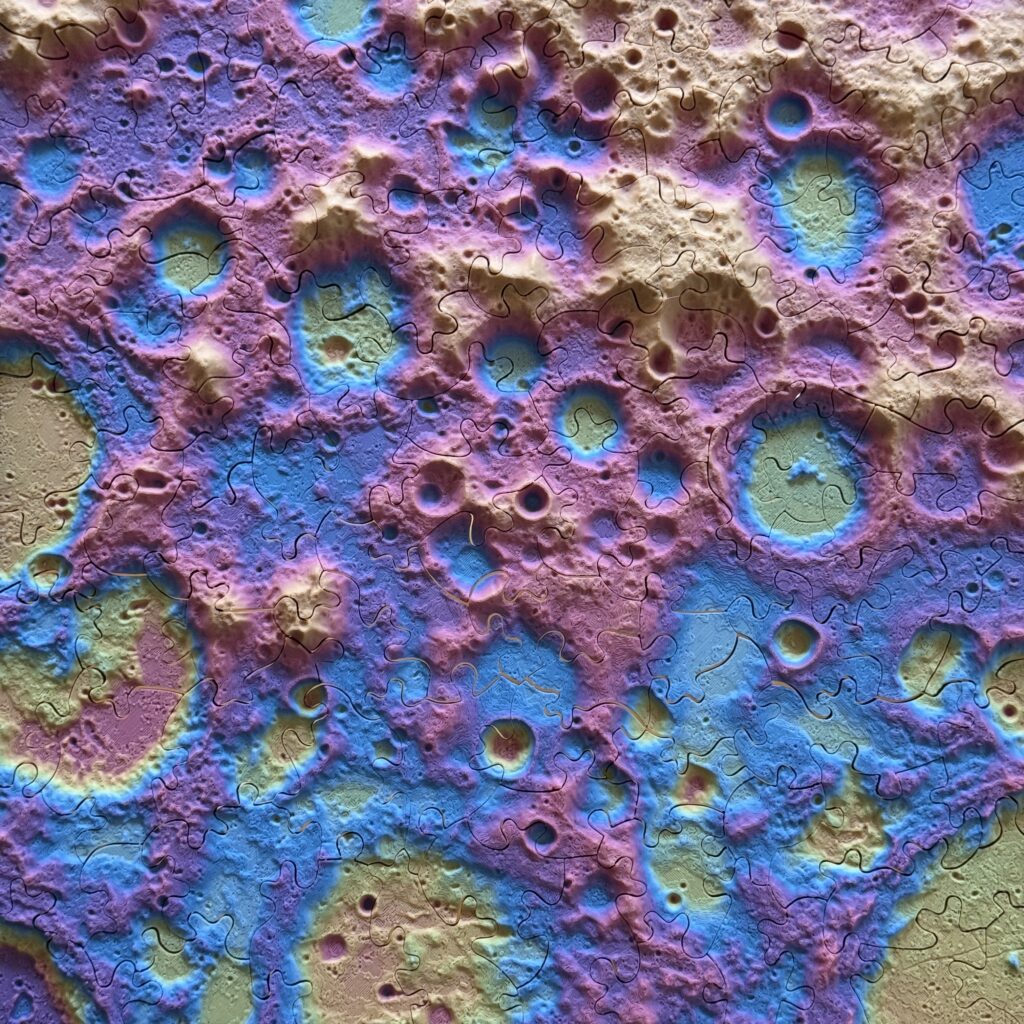
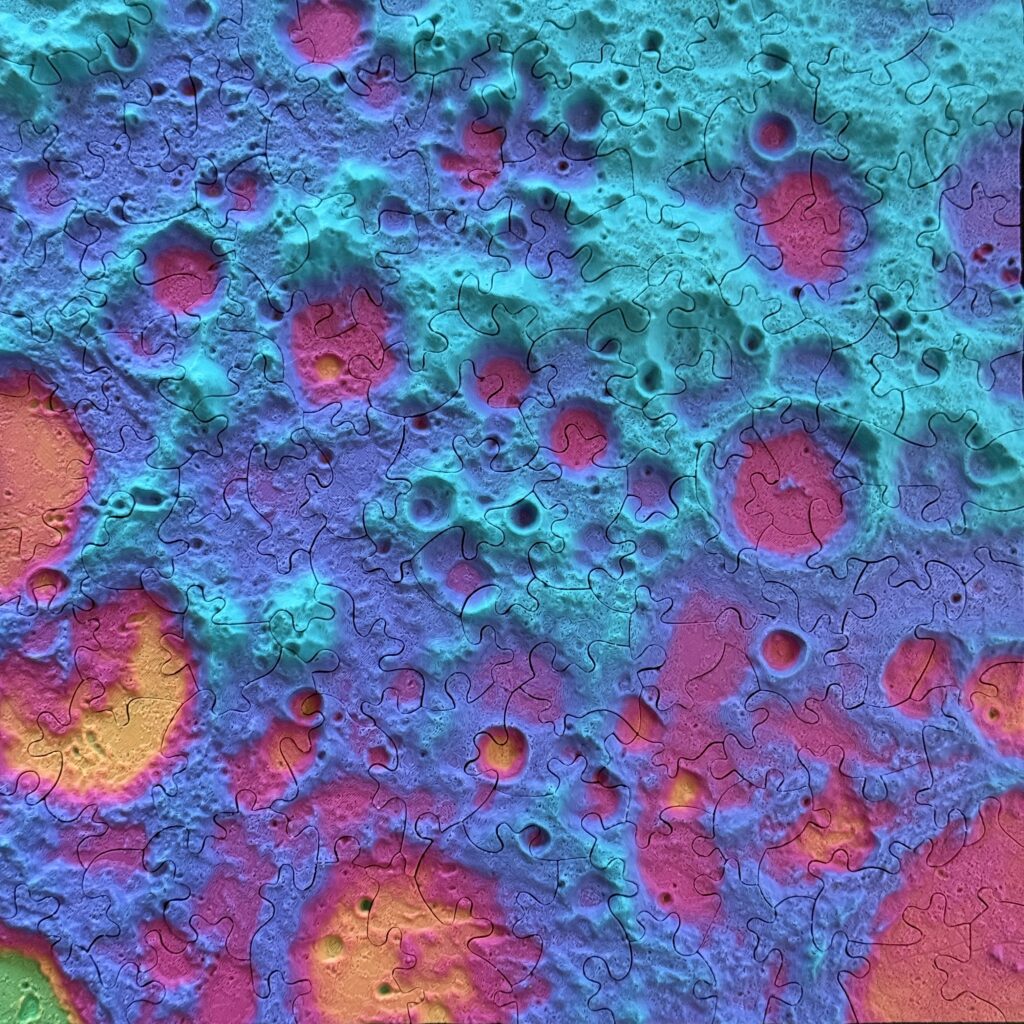
The Lunar South Pole Puzzle is a physical jigsaw puzzle that reproduces the actual topography of the Moon’s south polar region in three dimensions. Where a conventional puzzle prints an image onto a flat surface, this object is the surface. Every crater rim, ridge, and shadowed basin is built into the material, so the assembled puzzle can be viewed under raking light and read with the fingertips as well as the eyes. The landscape it traces is the region where the United States will return astronauts to the Moon, including the craters Shackleton, de Gerlache, Haworth, Shoemaker, and Nobile.
Three Versions
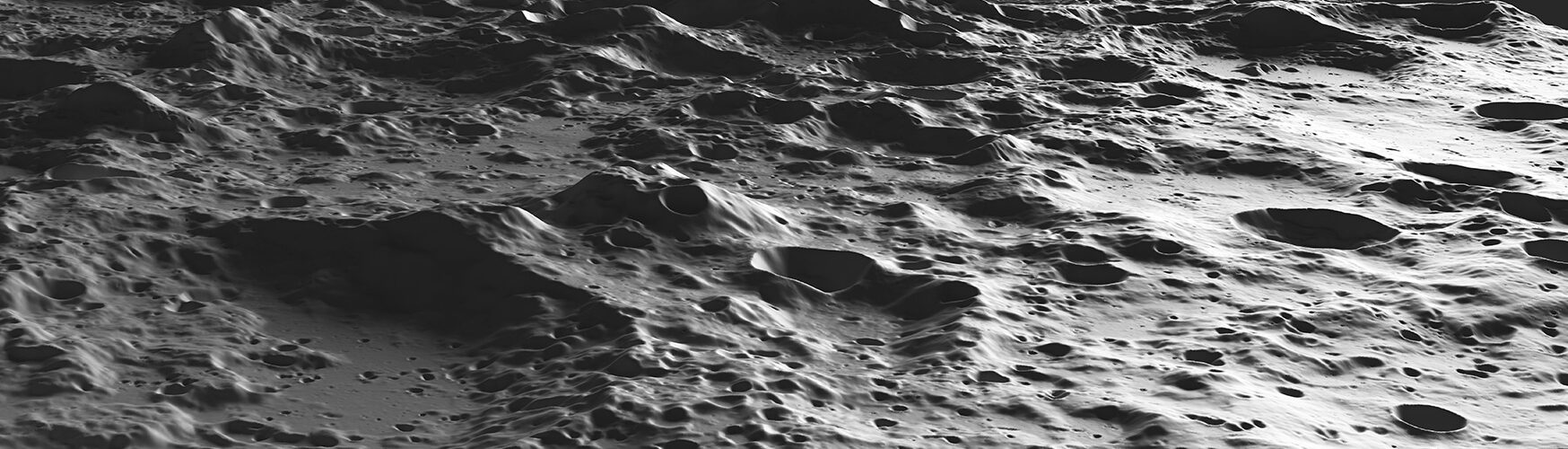
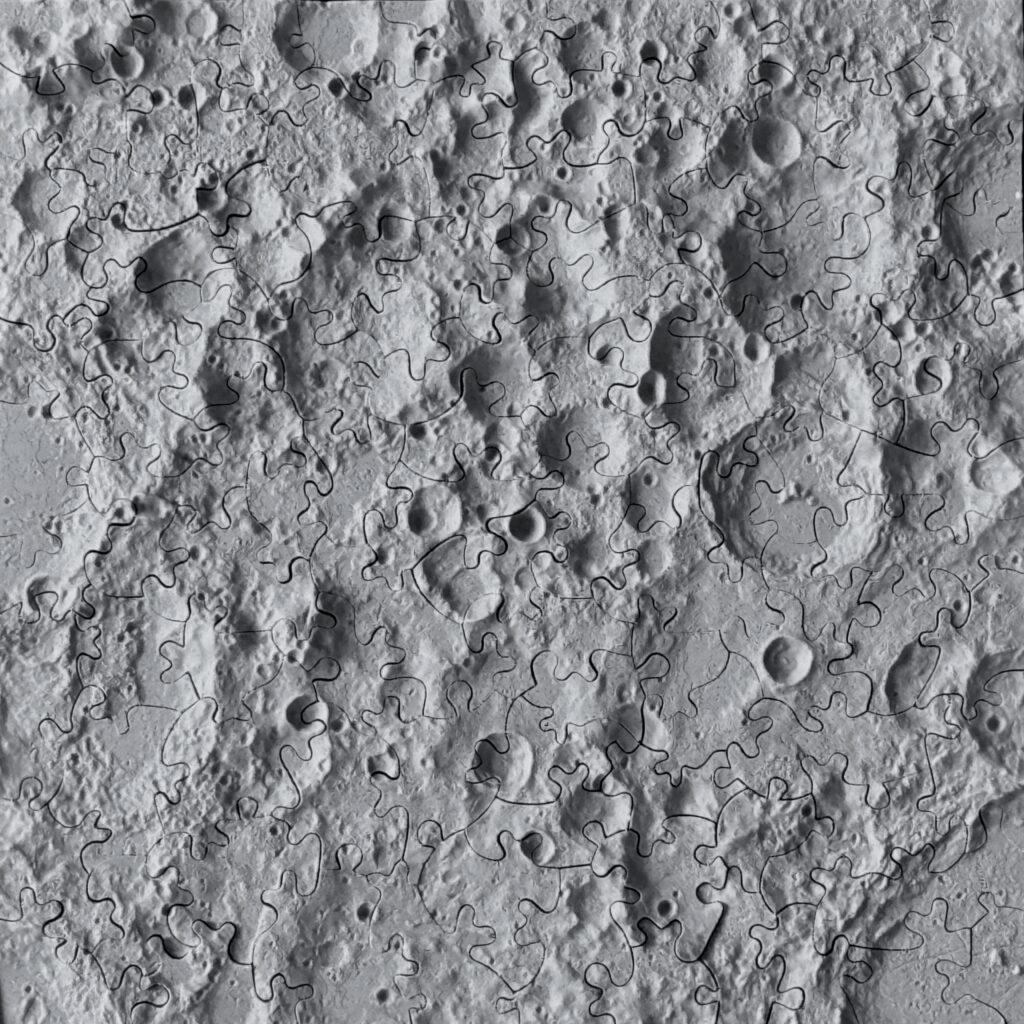
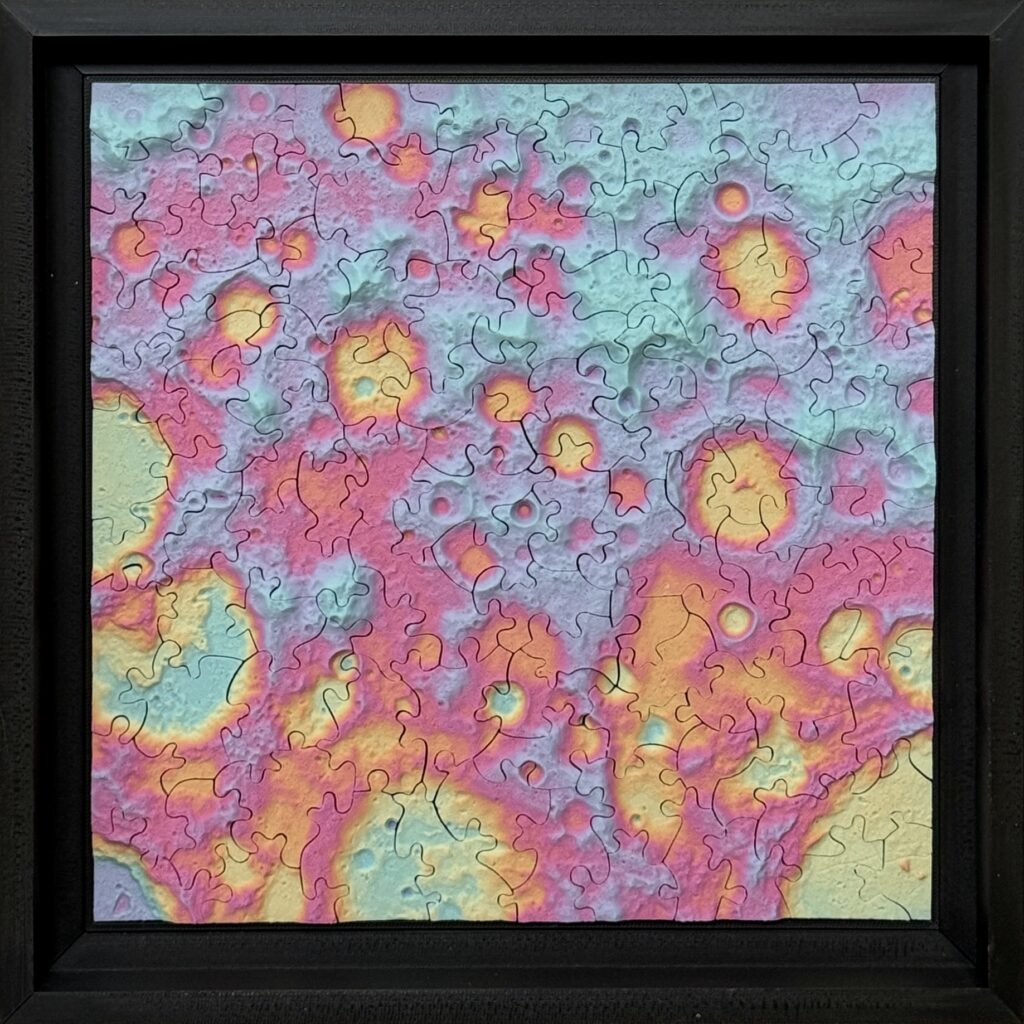
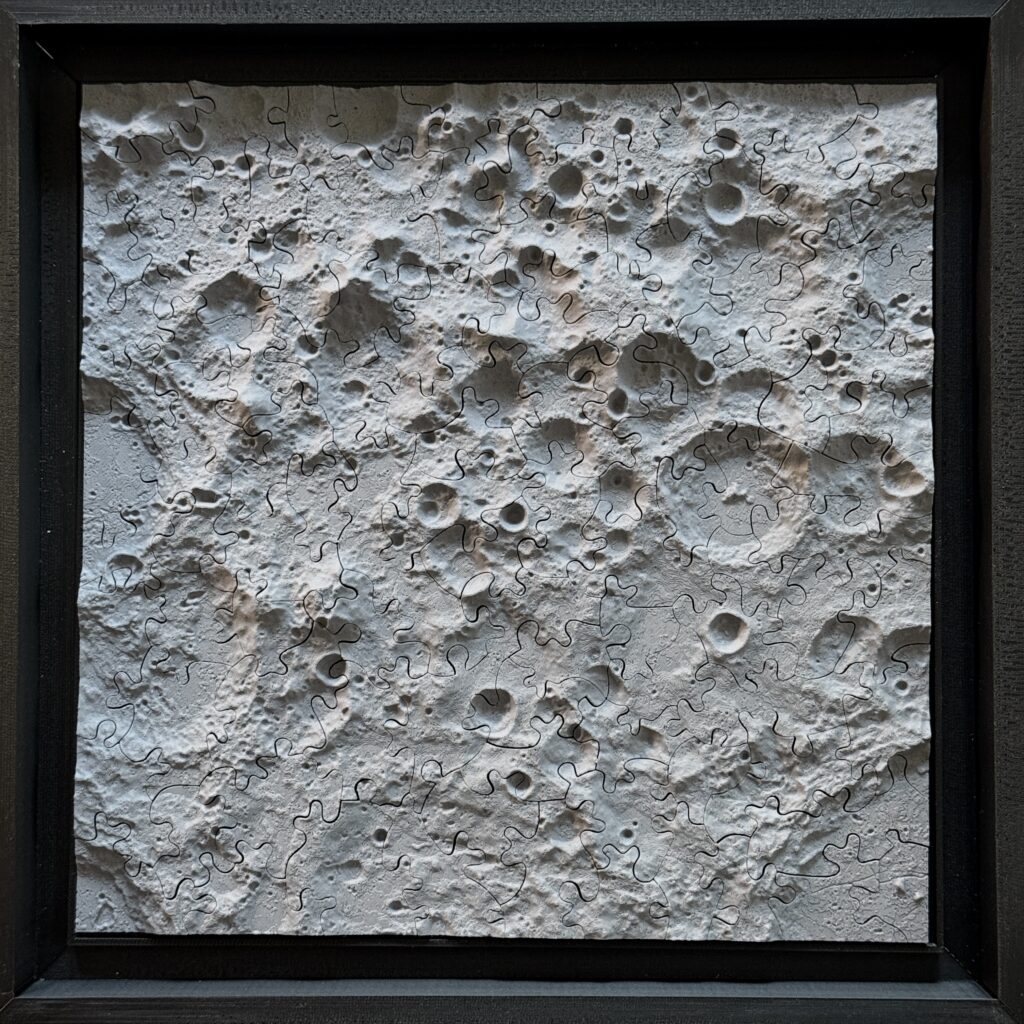
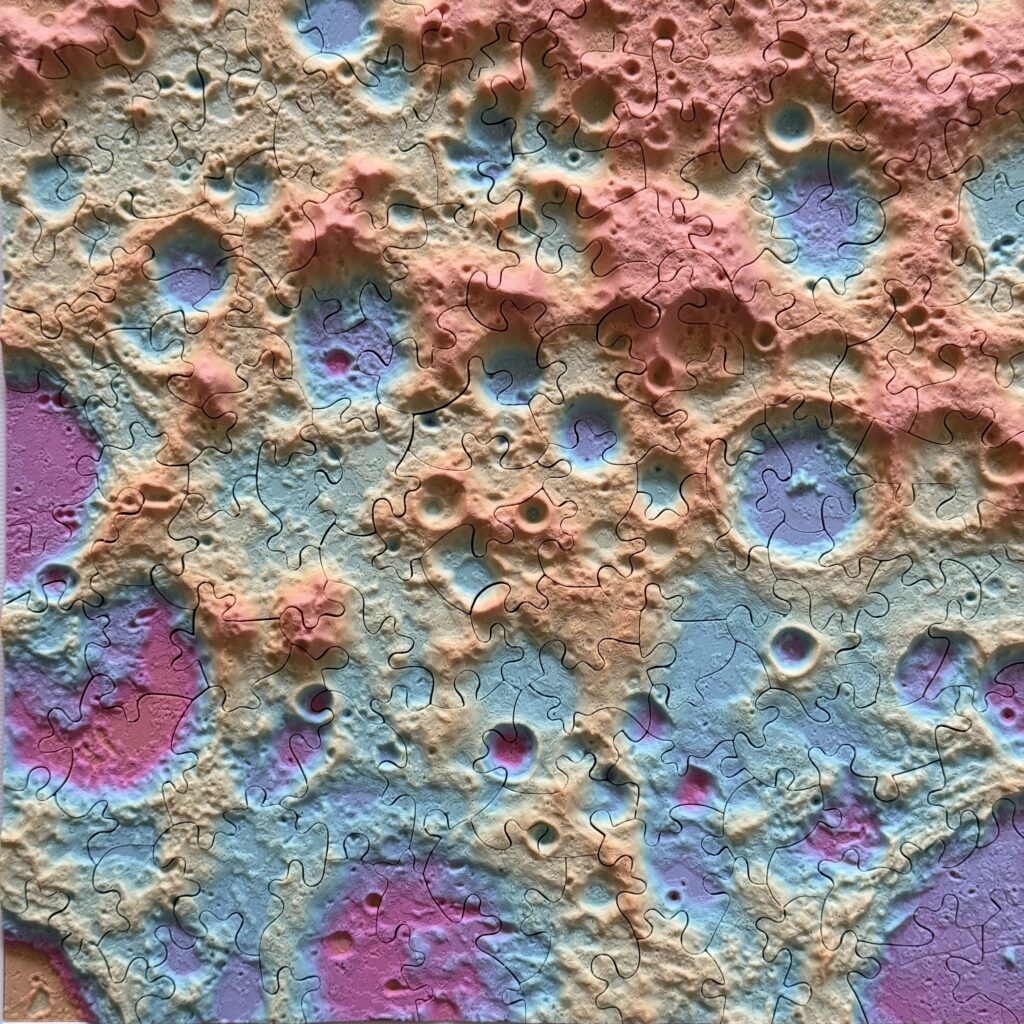
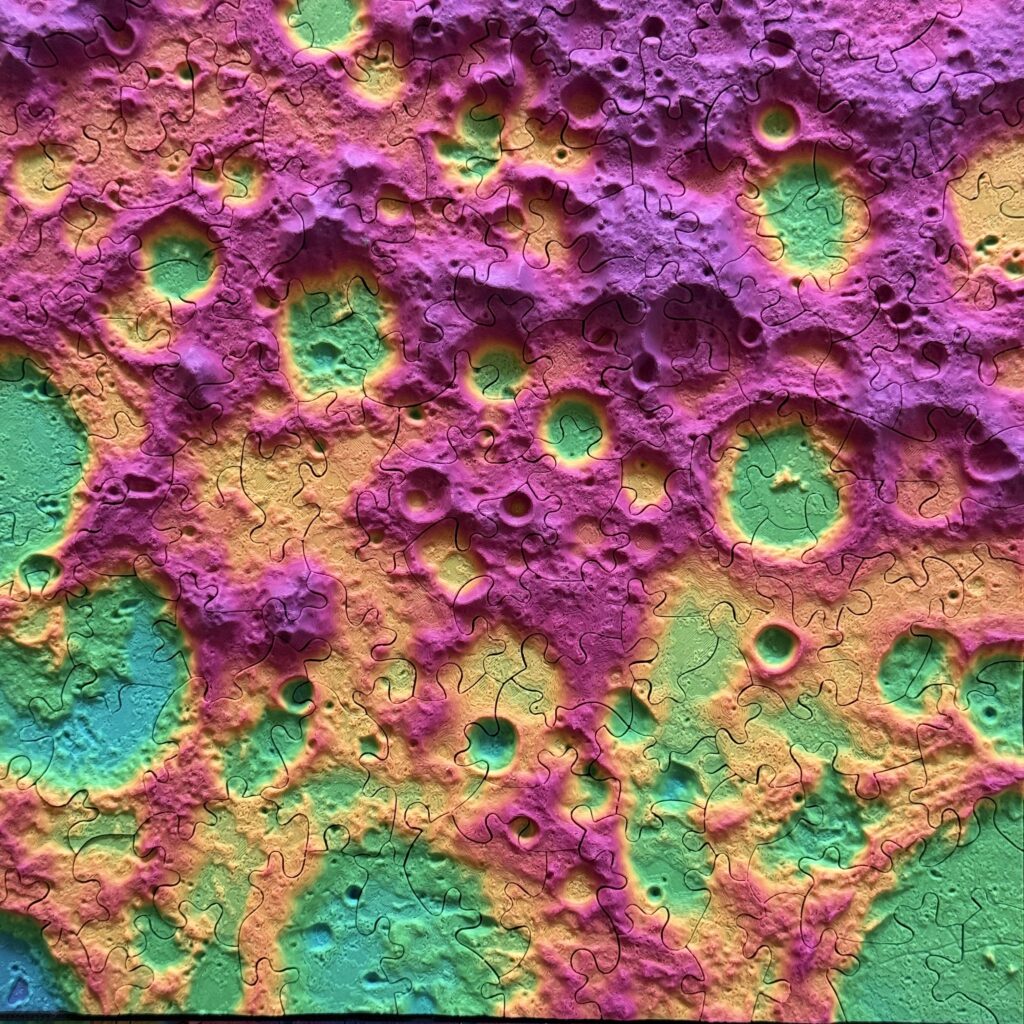
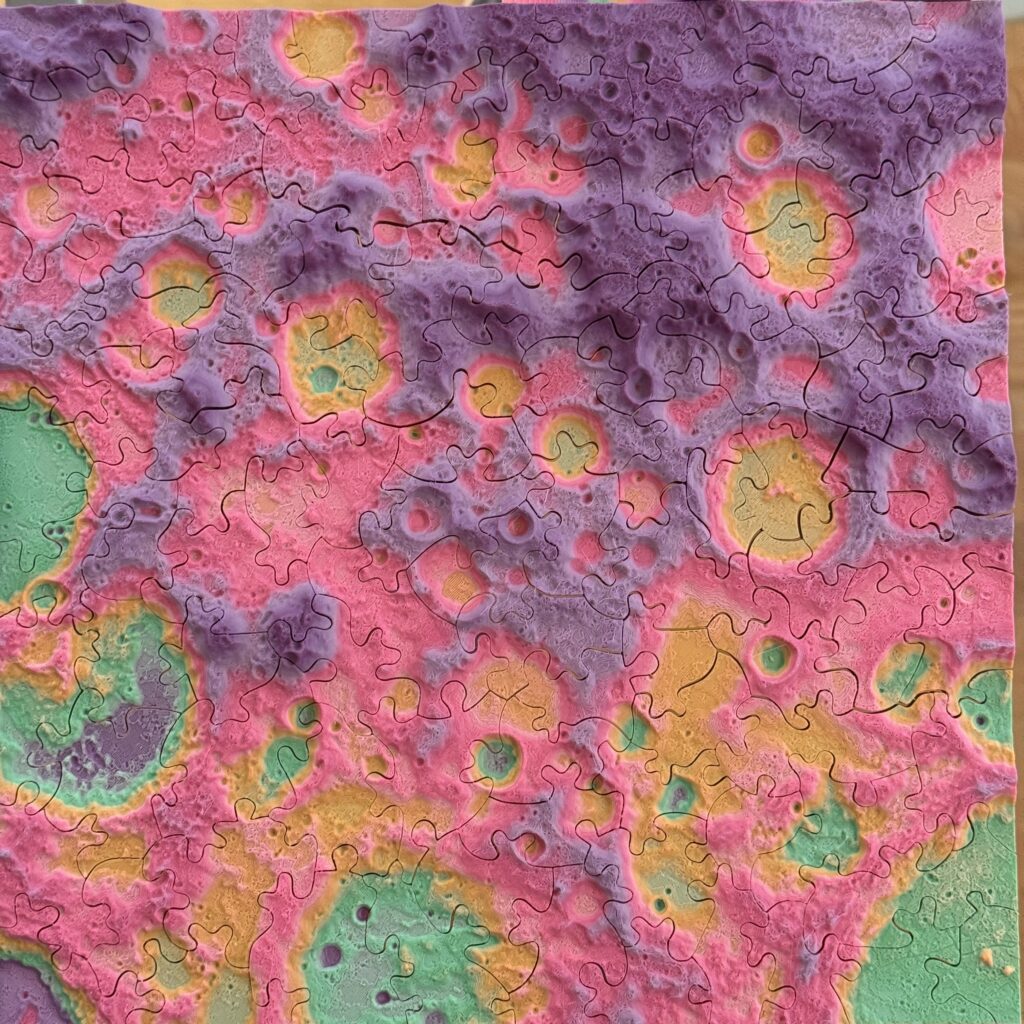
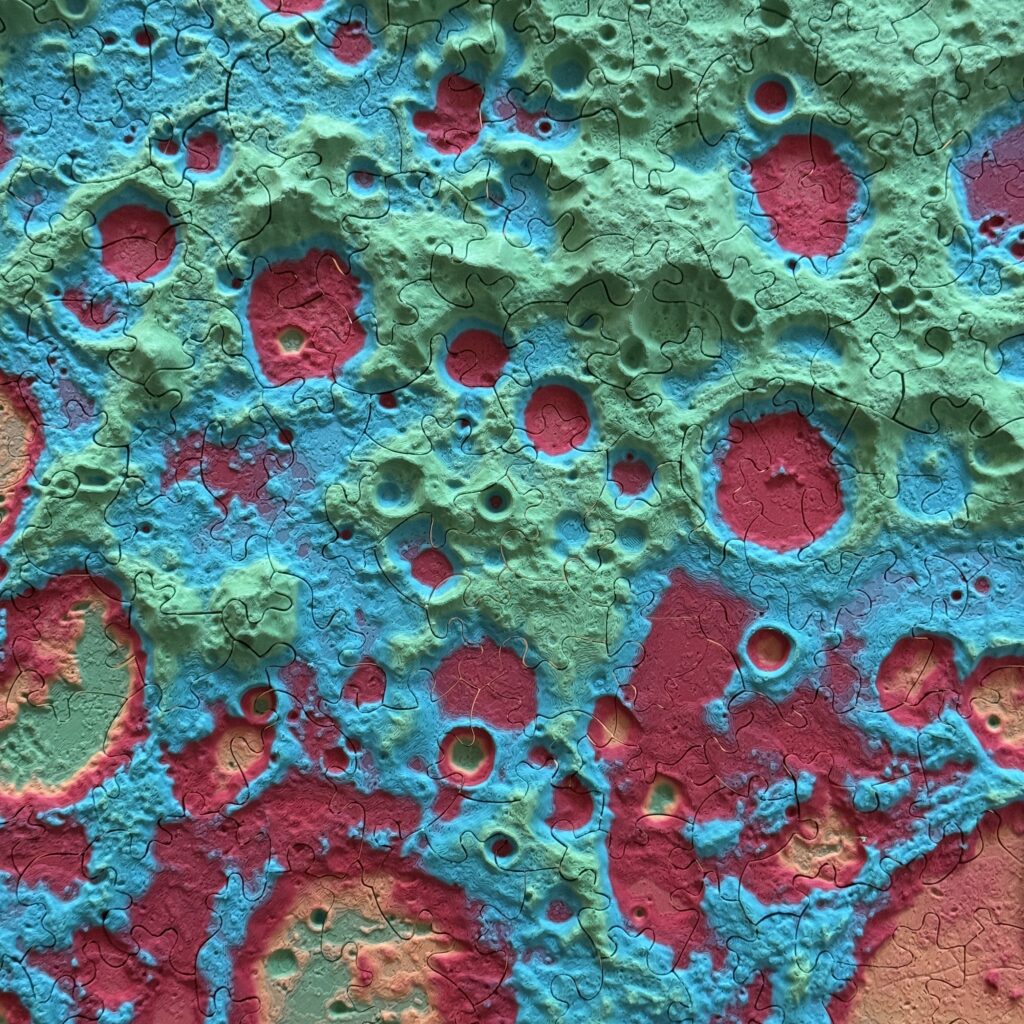
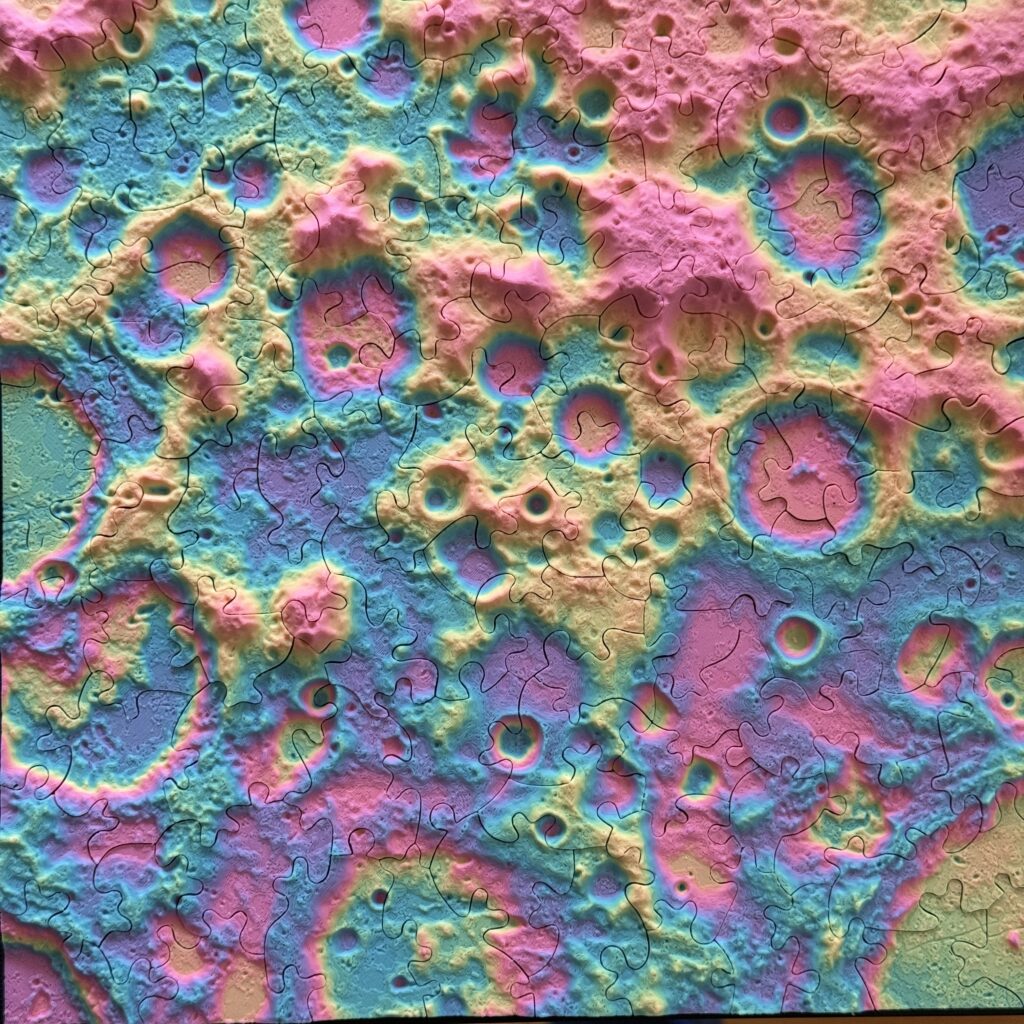
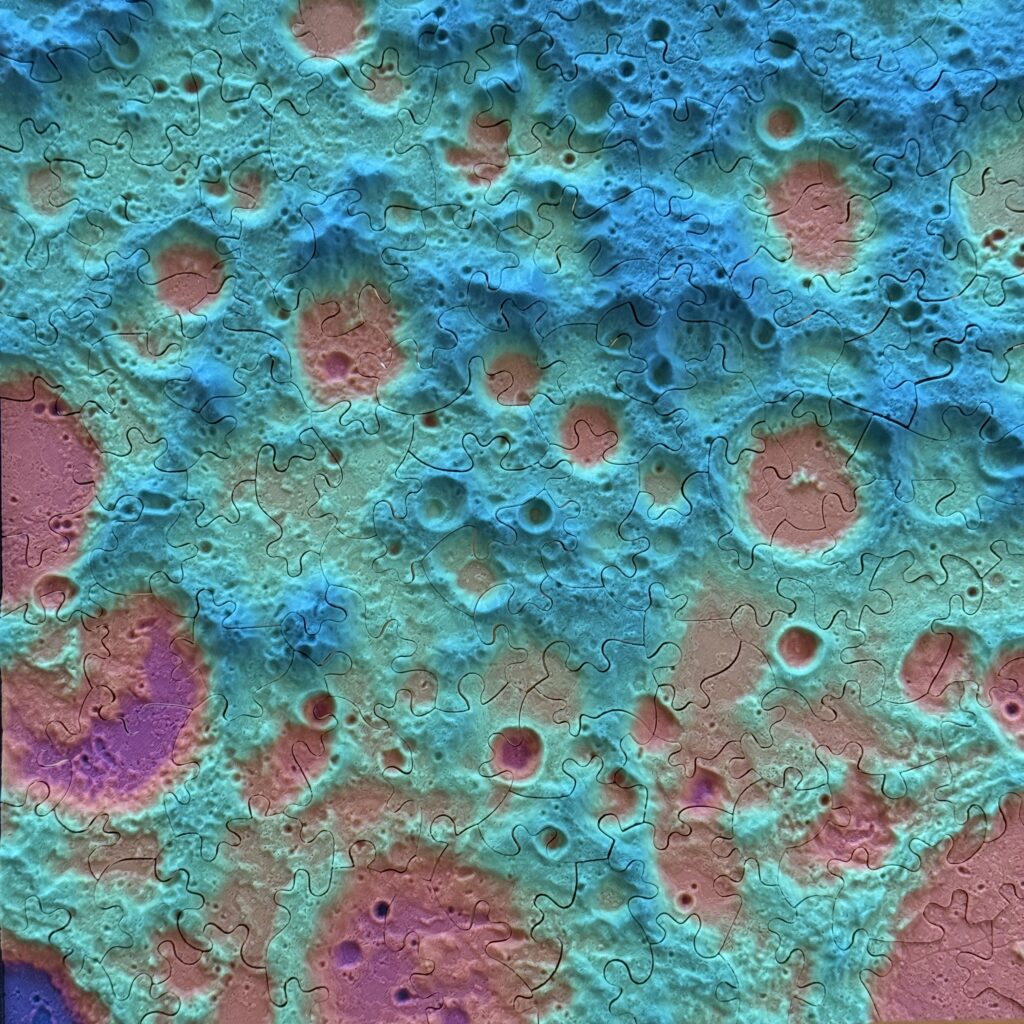
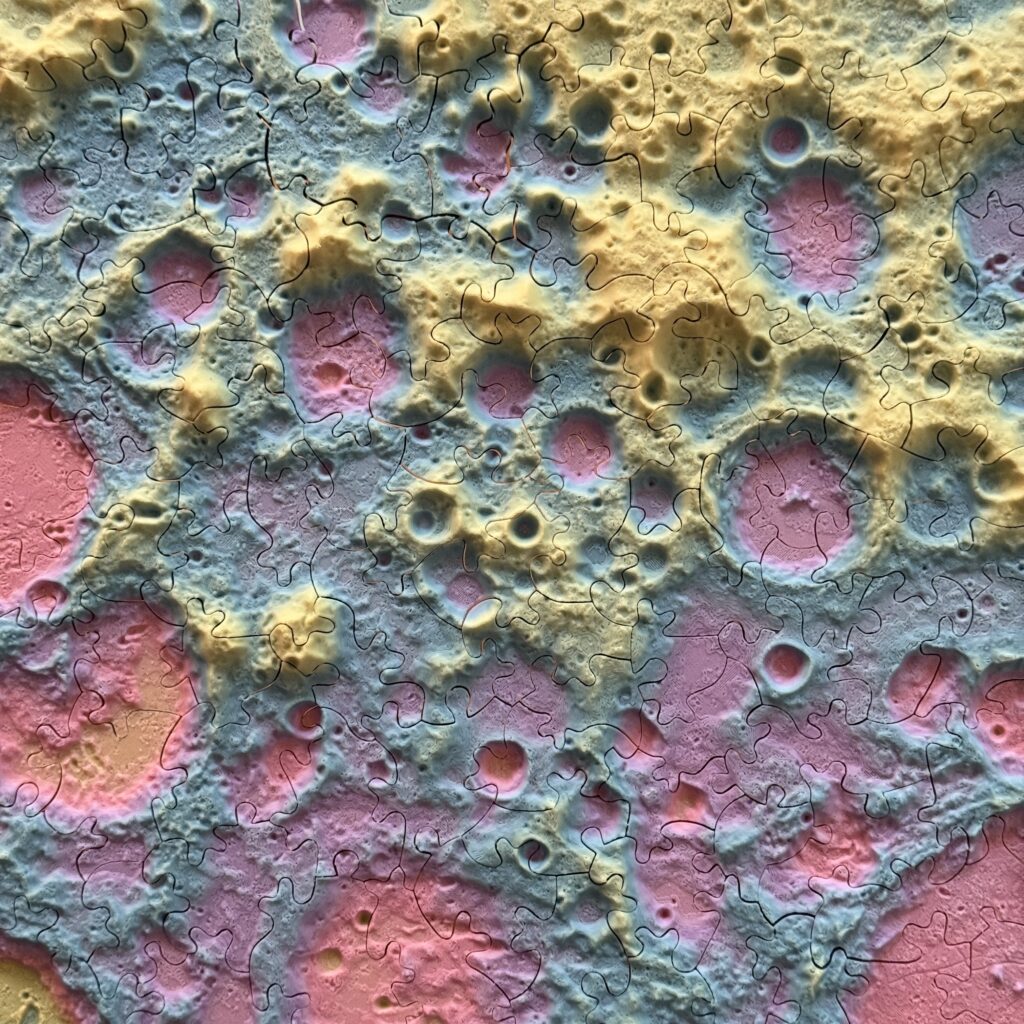
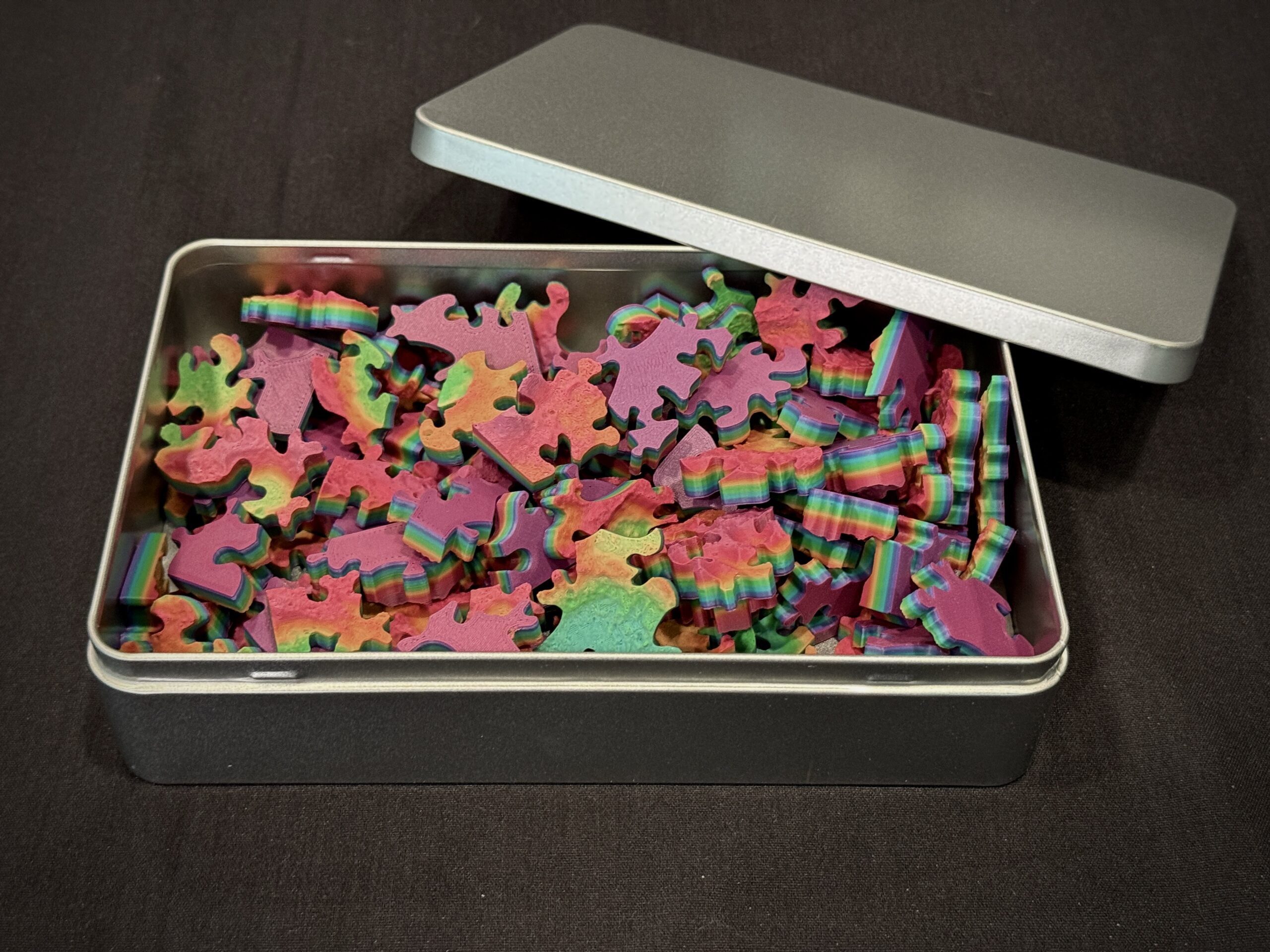
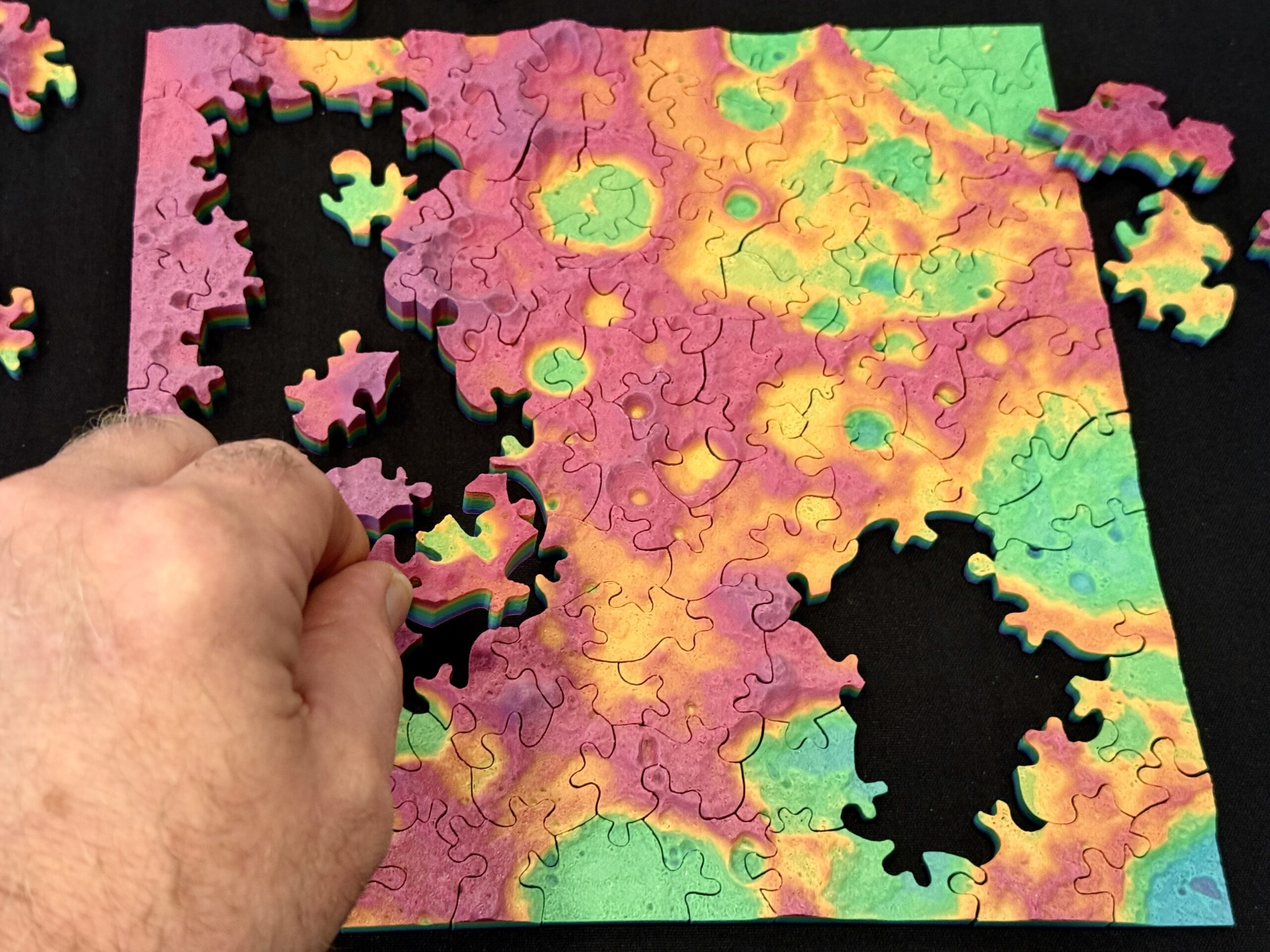
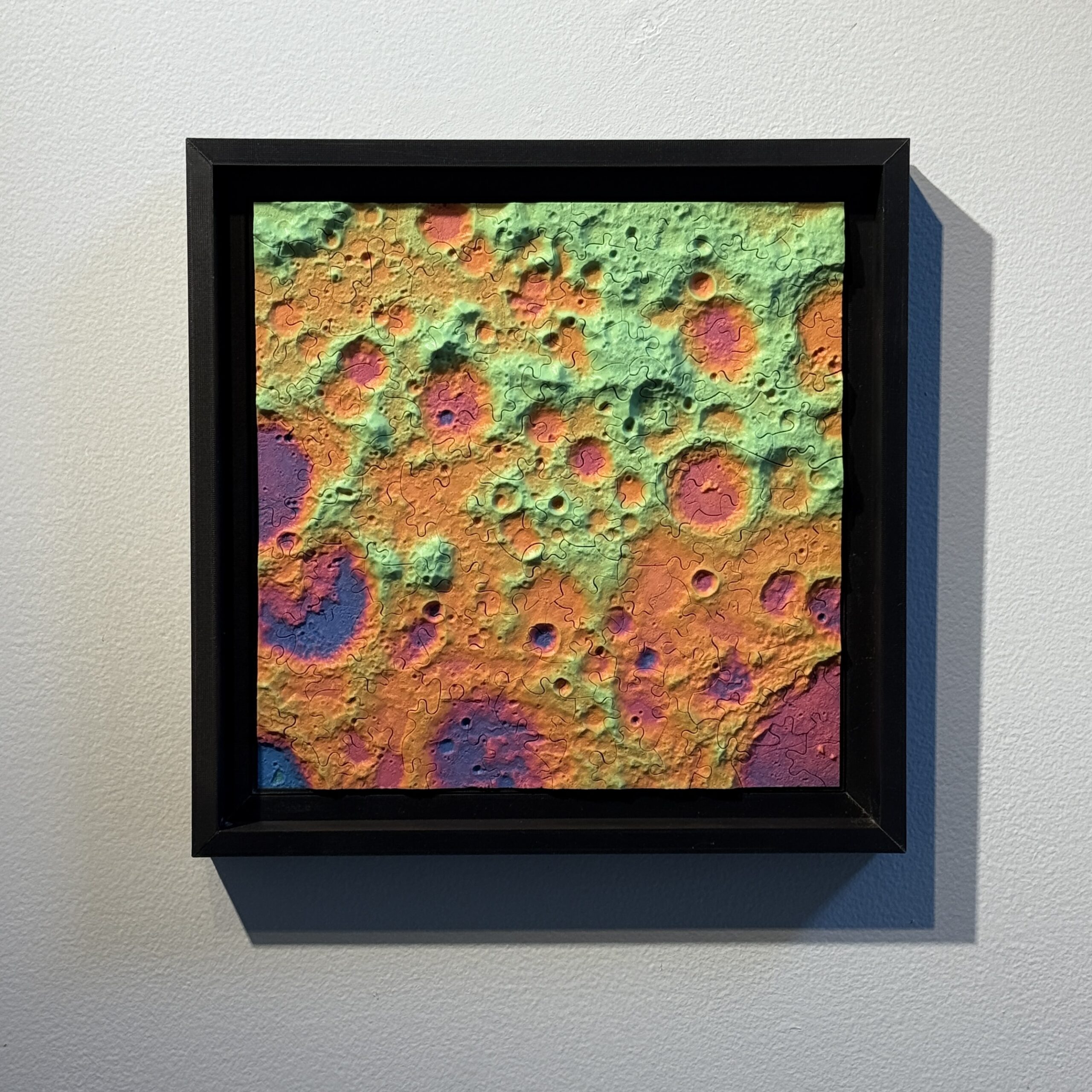
The puzzle is made in three forms. The first uses a graduated palette of colors keyed to elevation, so altitude is visible at a glance and the puzzle reads as a topographic map rendered in three dimensions. The second and third are monochrome gray, closer to the experience of observing the Moon through a telescope. These rely on directional light to reveal their features, so the same surface looks different across the course of a day. A companion display frame for the 9×9 inch puzzles are offered as a free 3D-printable download which lifts the assembled puzzle off the table, turning it into a wall-mounted relief work of art.
How it is made
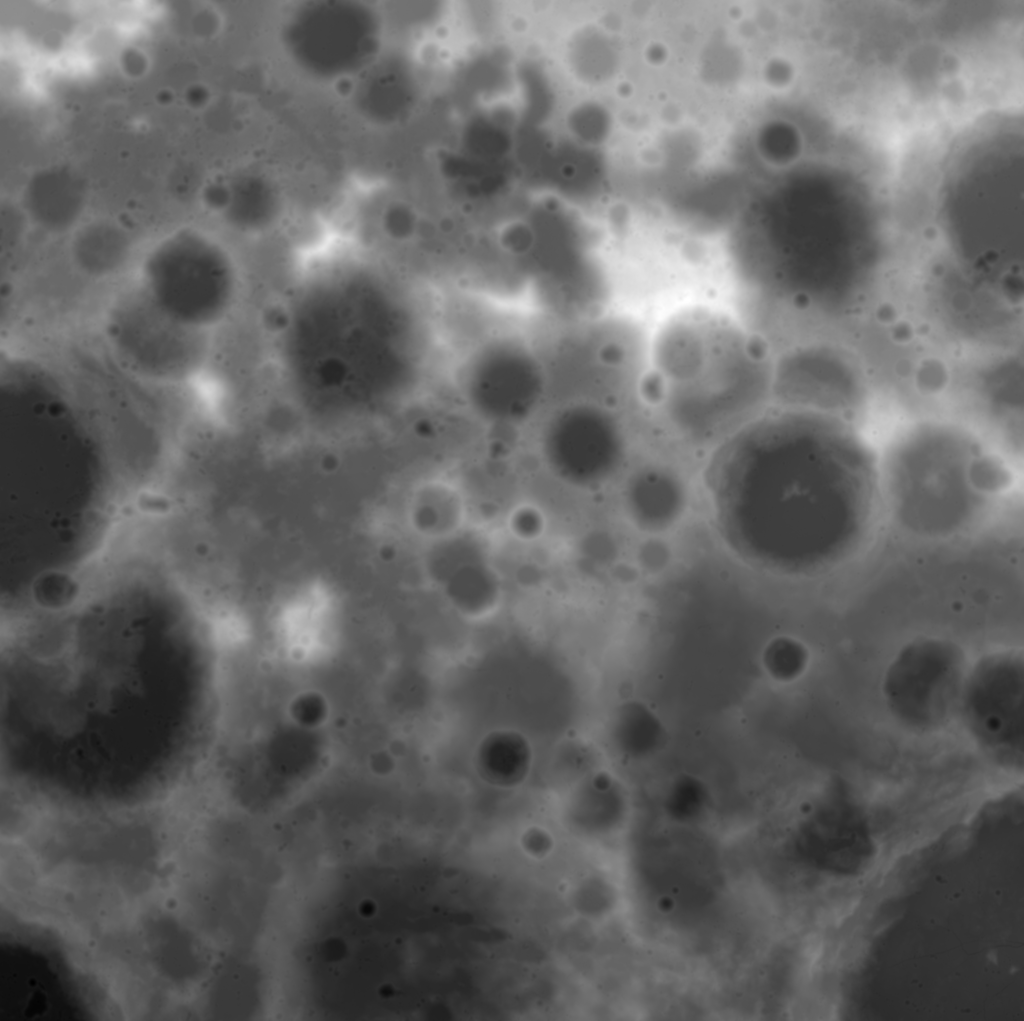
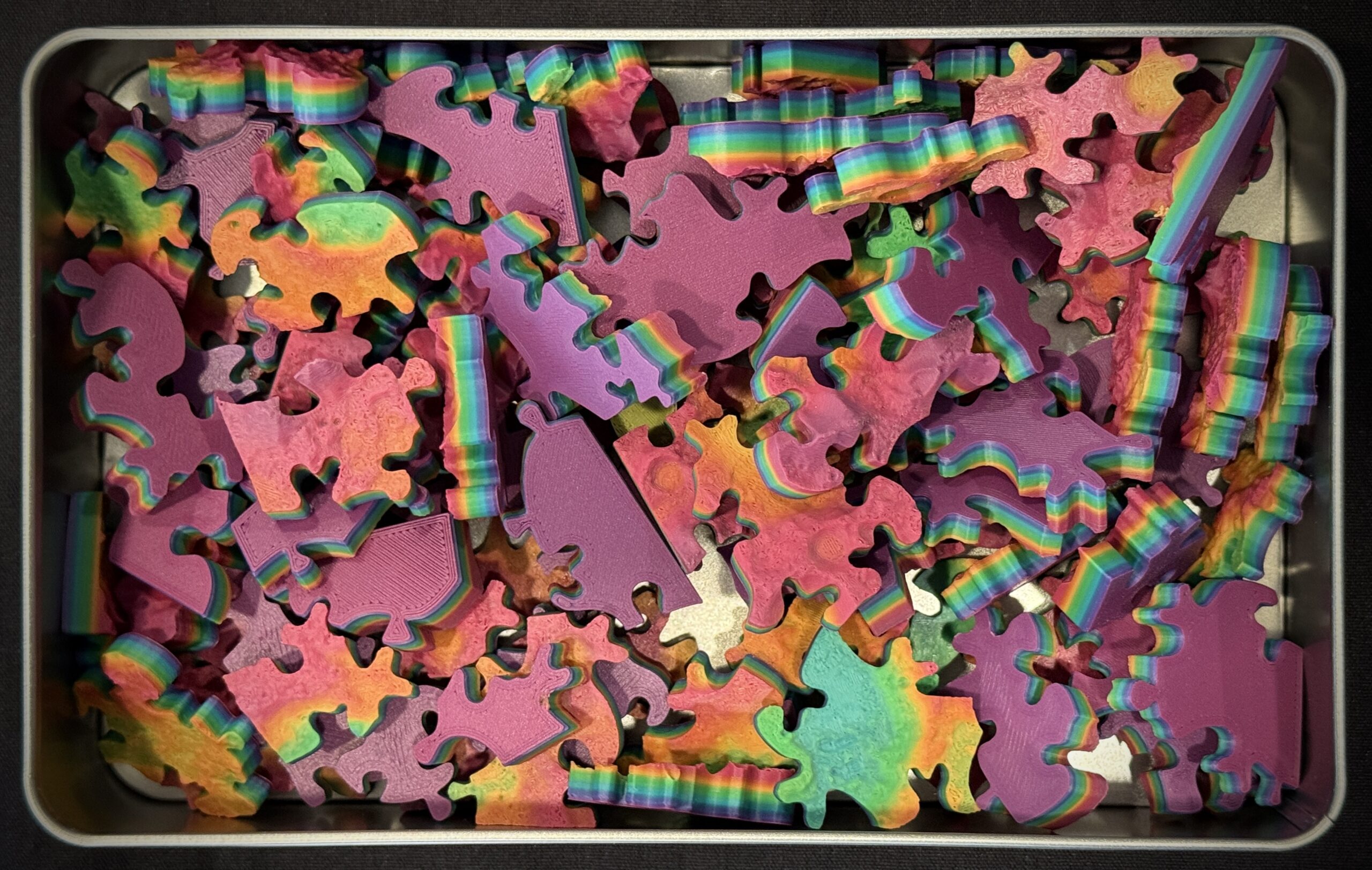
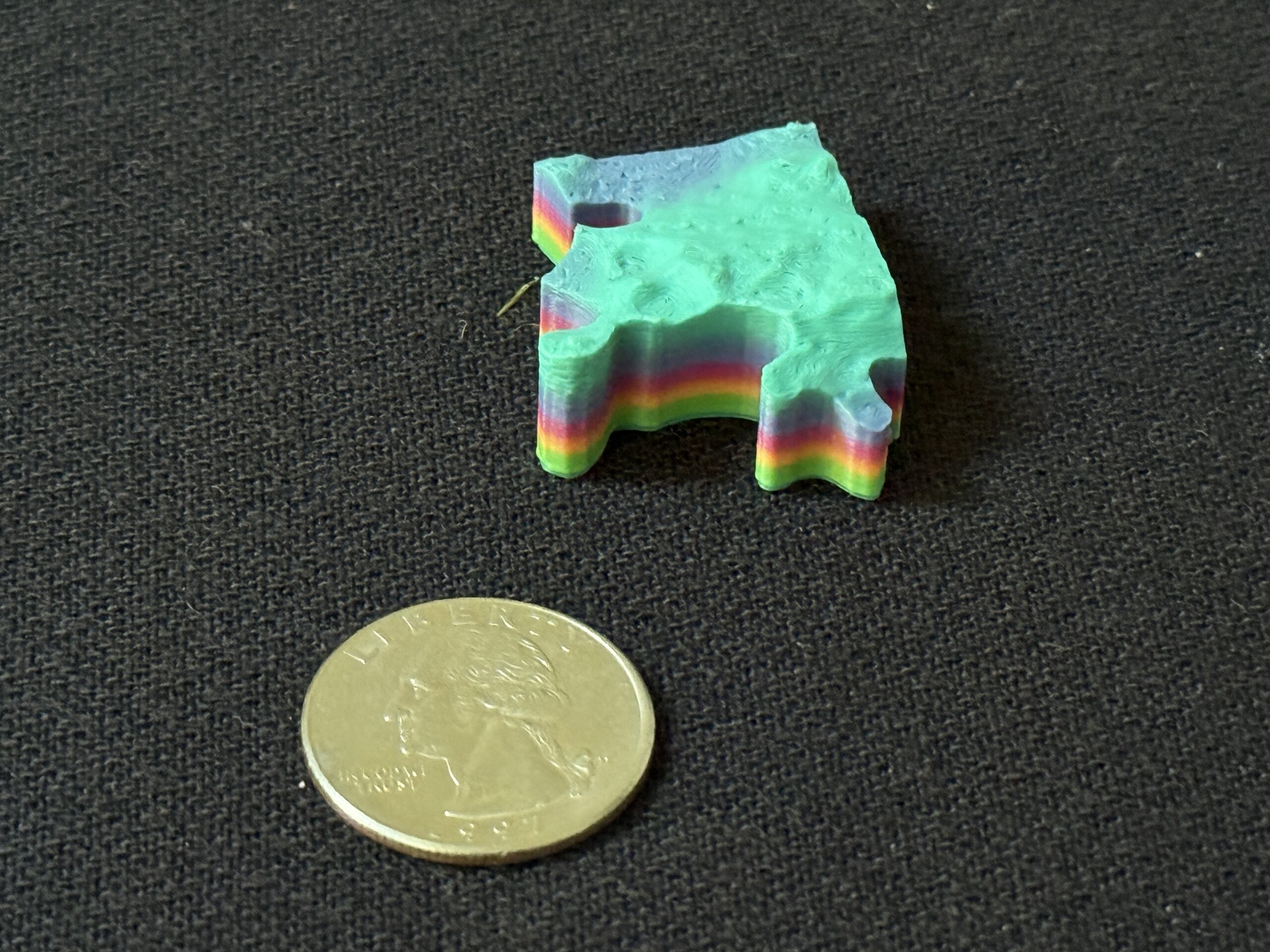
The source data is NASA’s Lunar Orbiter Laser Altimeter, a publicly available elevation model of the Moon at twenty-meter resolution captured by the Lunar Reconnaissance Orbiter. In the studio, the data is converted into a displacement map, translated into a three-dimensional surface, and divided into one hundred and one interlocking pieces using a Victorian-inspired cut designed specifically for this object. Each piece is fabricated layer by layer in a color-shifting or monochrome PLA bioplastic. The 312 layers carry the elevation information inside the material rather than printed on top of it making each piece a delight to hold.
The conversion pipeline, the piece cut, the elevation-to-color mapping, and the frame design are all developed in the Faur Design studio in Granville, Ohio.
Notes on the Project
For decades I have made art that translates data into physical form, from crayon-pixel portraits to a color-coded alphabet. The Lunar South Pole sits inside that practice. It began with the question of what it would feel like to actually touch the place where the next generation of astronauts will land, rather than only seeing it as an image. The puzzle is the answer I arrived at: a small, considered object that holds real coordinates, real elevation, and real shadows, and asks to be assembled slowly.
I made it for people who already collect small-run handmade objects, for amateur astronomers and families following the Artemis program, and for anyone drawn to the idea of assembling a landscape no human has ever walked on yet.
The Object
A flat printed picture of the Moon and a three-dimensional model of it are different things. This puzzle is the second. The surface you assemble has actual relief built into it, crater rims you can run a finger across, shadows that move when the light moves, a topography that is based on real data. Where most moon-themed objects on the market are illustrations of the Moon, this one is a small piece of its geography.
Timing shapes the work as well. The Artemis program is returning astronauts to the lunar south pole, the specific region this puzzle reproduces, and that landscape is moving from the periphery of public attention toward its center. To assemble it now, crater by crater, carries a weight it would not have carried five years ago.
Each Puzzle
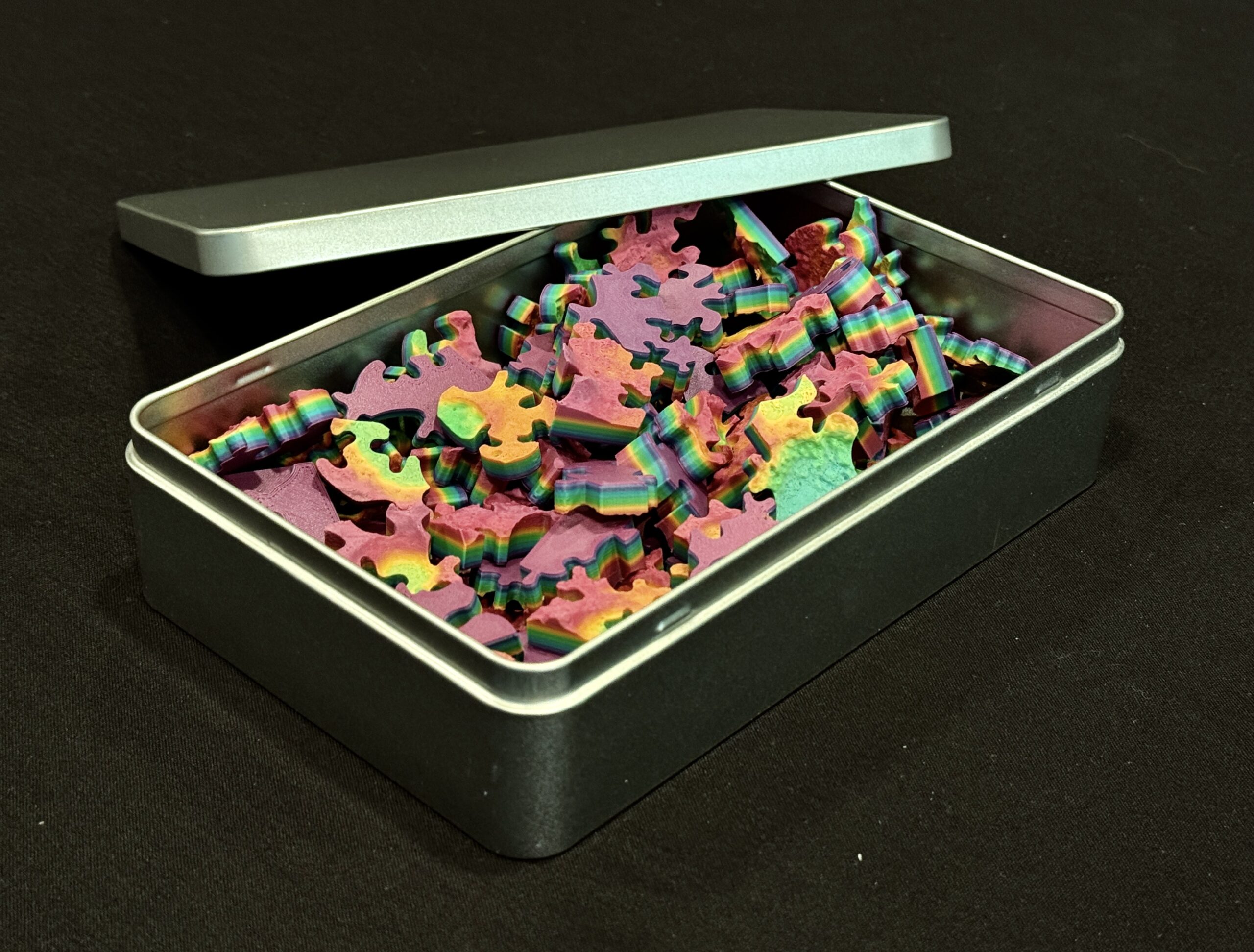
Every color puzzle is one of a kind. The bioplastic shifts gradually through its spectrum as the puzzle is built, and because each print begins at a slightly different point in that color sequence, no two puzzles ever land on the same arrangement of hues. The 9 × 9 inch (23 × 23 cm) puzzle contains 101 interlocking pieces, rises through 312 layers, and takes 27 hours to fabricate. The Jigsaw piece pattern was designed by Christian Faur and photographed in the studio so you have an exact reference for your edition as you assemble it. Each puzzle is finished, packed, and shipped from the Faur Design studio in Ohio.
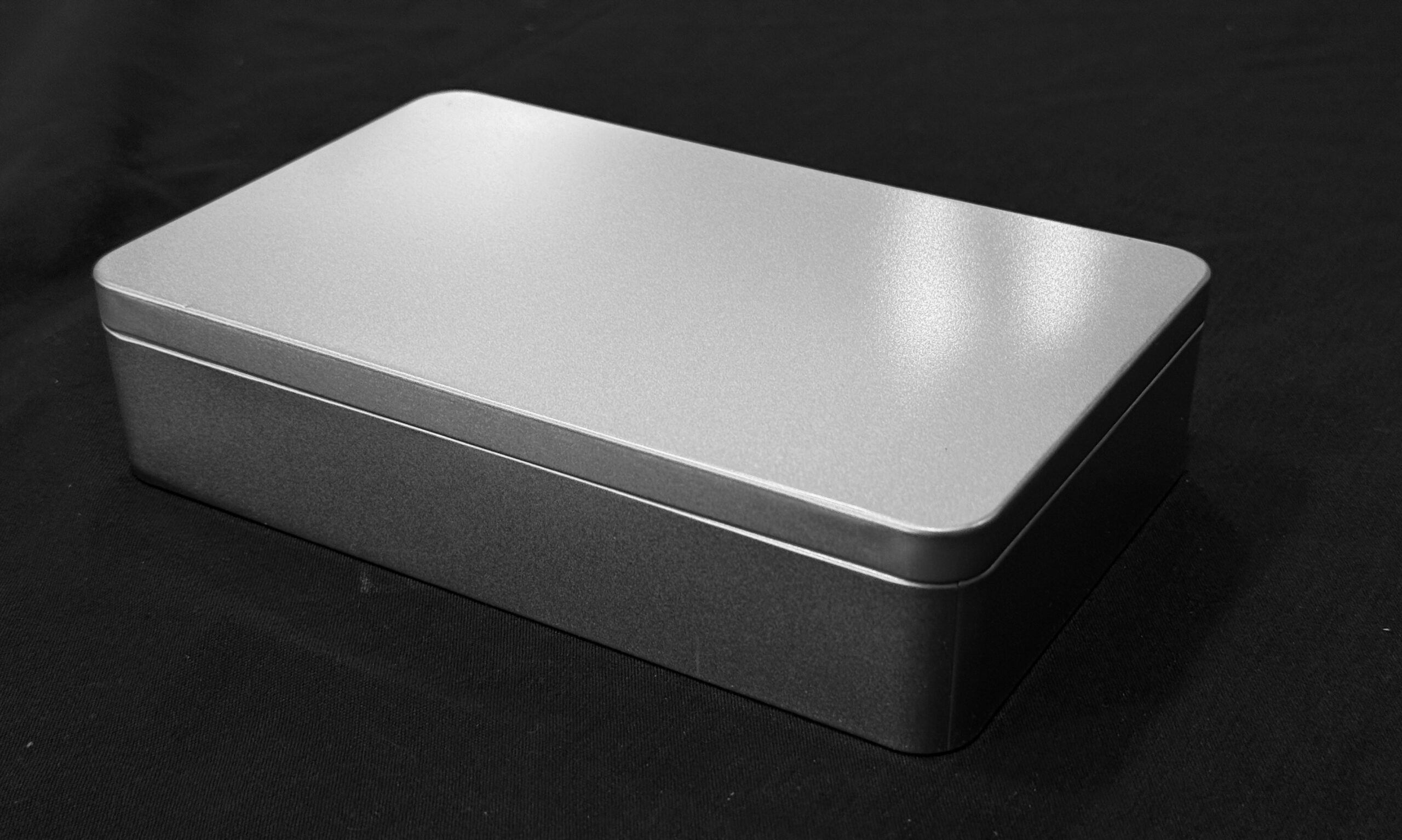
Once assembled, the puzzle can be returned to its tin or displayed on the wall as a small work of art, a tactile map of a real place on the Moon. The 9 × 9 inch color edition is priced between $50 and $62. The display frame is offered as a free 3D-printable download (coming soon).
Note: new materials are arriving at the studio regularly, each with its own palette and its own way of moving through color. Future editions will be released in small numbered runs as these materials come into use, so that each release marks a particular moment in the project’s life.
Availability
The first edition of the Lunar South Pole Puzzle is being prepared for release. Prototypes are complete, the cut is final, and the studio is in production. If you would like to be notified when the first puzzles ship, contact the studio through my contact page.